

Building your financial future doesn’t have to be a stressful, overwhelming journey. With the right mindset, clear goals, and simple strategies, you can pave the way to long-term financial security without the constant worry. Whether you’re just starting or looking to improve your current situation, this guide will show you how to approach financial planning in a stress-free and manageable way. By focusing on key aspects like saving, budgeting, and investing, you can build a secure financial future without feeling overwhelmed. Start today and learn how to reduce stress while taking charge of your financial goals.
Understanding Your Financial Goals
Identifying Your Goals
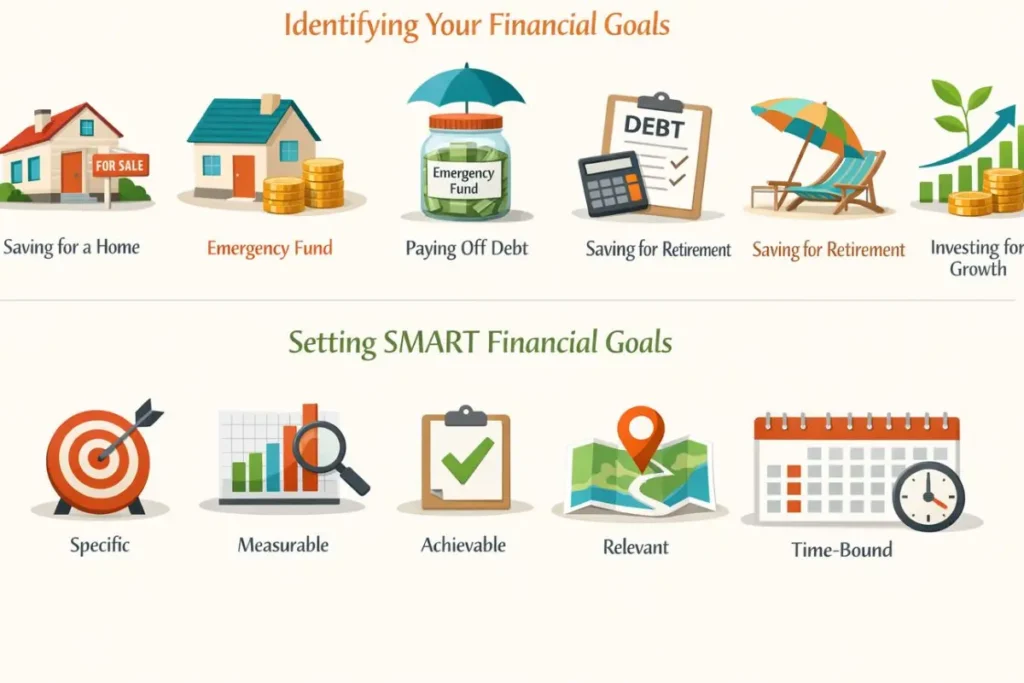
One of the first steps in building a stress-free financial future is identifying what you want to achieve. Setting clear financial goals gives you direction and purpose.
- Saving for a down payment on a house
- Building an emergency fund
- Paying off debt
- Saving for retirement
- Investing for long-term growth
To make your goals more achievable, break them into smaller milestones. For example, instead of saying, “I want to save $20,000,” break it down into monthly savings goals of $1,000. This makes your financial future seem less intimidating and more attainable.
Setting SMART Goals
It’s not enough to set goals; they need to be SMART—Specific, Measurable, Achievable, Relevant, and Time-bound. Here’s how:
- Specific: Be clear about what you want (e.g., “Save $5,000 for an emergency fund”).
- Measurable: Track your progress with tools or apps.
- Achievable: Make sure your goals are realistic based on your income.
- Relevant: Ensure your goals align with your life priorities (e.g., buying a house vs. taking a luxury vacation).
- Time-bound: Set deadlines to keep you accountable.
Creating a Budget for Success
Building a Simple Budget
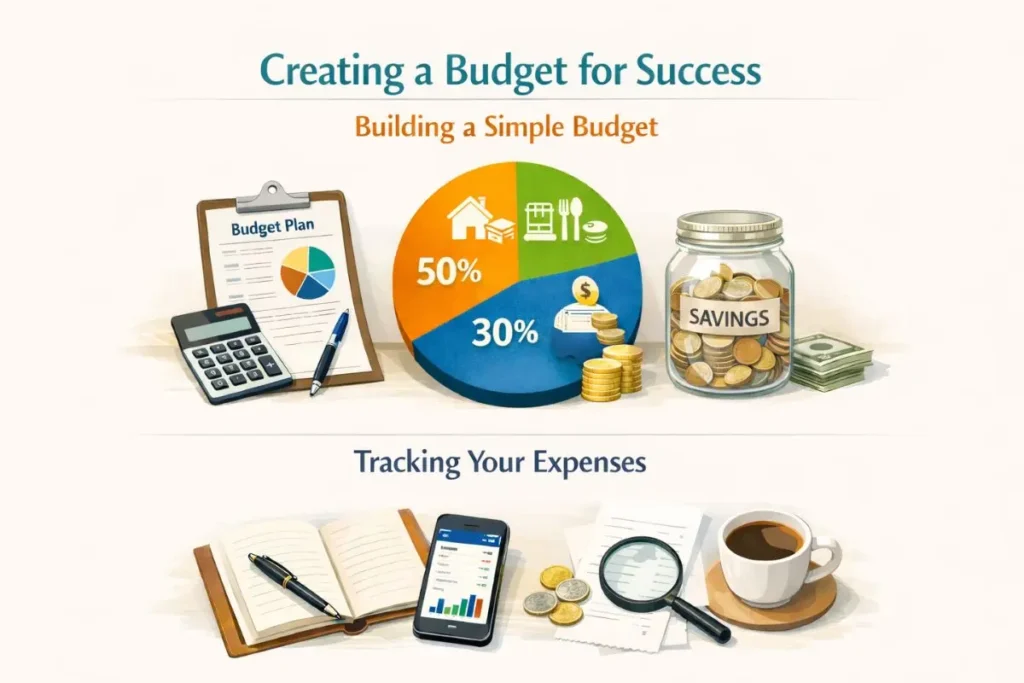
A budget is your financial blueprint, guiding your spending and saving. Here’s a simple way to structure your budget:
- 50% for essentials like rent, groceries, and utilities
- 30% for discretionary spending like entertainment, eating out, and hobbies
- 20% for savings and debt repayment
This method ensures that you’re not spending too much on wants while still leaving room to enjoy life. Budgeting apps can make this process even easier by automating much of the work. The more you use them, the less effort it takes, making the process stress-free.
Tracking Your Expenses
Knowing where your money is going is crucial. Begin by tracking your daily spending. Write down every purchase or use an app to record your expenses automatically. This helps you:
- Identify unnecessary spending
- Find ways to cut costs
- Align your spending with your goals
Building Emergency Savings for Peace of Mind
Why You Need an Emergency Fund
An emergency fund acts as a safety net. It’s your backup plan for unexpected situations like a job loss, medical emergency, or sudden car repair. Without an emergency fund, these events could derail your financial plans and cause a lot of stress.
Experts recommend having 3 to 6 months of living expenses saved. The more you can save, the more peace of mind you’ll have knowing that you’re covered if something unexpected happens.
How Much to Save
Start small if necessary. Even saving a few hundred dollars is better than having nothing. The goal is to gradually build your emergency fund over time, and automating your savings ensures consistency without thinking about it constantly.
This simple step helps remove financial stress by ensuring you have a cushion when life throws unexpected challenges your way.
Reducing Debt: The Key to Freedom
The Dangers of High-Interest Debt
Debt is a major stressor for many people, especially high-interest debt like credit cards. High-interest debt grows quickly and can leave you feeling trapped. The average American carries a significant amount of credit card debt, making it difficult to save or invest for the future.
To start reducing your debt, follow these methods:
- Debt Avalanche: Pay off the highest-interest debts first while making minimum payments on others.
- Debt Snowball: Pay off the smallest debts first to build momentum.
Both methods are effective, but the key is to stay consistent with your payments. As your debts decrease, you’ll have more money to put toward savings and investments, reducing stress and building your financial future.
Consolidating Debt for Easier Management
If managing multiple debts feels overwhelming, consider debt consolidation. This can combine your debts into a single monthly payment, often with a lower interest rate. Some options for debt consolidation include:
- Personal loans
- Balance transfer credit cards
- Home equity loans
Investing for Your Future
The Basics of Investment
Investing is a powerful tool to build wealth over time. Stocks, bonds, and index funds are common investment options. Here’s how they work:
- Stocks: Buying shares of a company and earning a return based on its performance.
- Bonds: Lending money to companies or governments in exchange for interest.
- Index Funds: A basket of investments that tracks an entire market index, like the S&P 500.
The earlier you start investing, the more time your money has to grow. Even small contributions to a retirement account (e.g., 401(k) or IRA) can make a huge difference in the long run.
Understanding Risk and Diversification
Investing involves risk, but spreading your investments across different assets can help reduce it. Diversification means that if one asset loses value, others might gain, balancing your overall portfolio.
Start with low-risk investments and gradually increase your exposure to higher-risk, higher-return assets as your confidence and knowledge grow. This approach helps you feel secure while you build wealth, making the process stress-free.
Planning for Retirement Without the Worry

Why Early Retirement Planning is Crucial
The earlier you start saving for retirement, the more time your money has to grow. Compound interest is a powerful tool that can significantly increase the value of your savings over time.
- Start contributing to a retirement account as early as possible
- Set up automatic contributions to make saving easier
- Review your retirement plan regularly to make sure it’s on track
How Much to Save for Retirement
The general recommendation is to save 15% of your income for retirement each year. However, the exact amount you need depends on your desired lifestyle, how long you plan to work, and how much you’ve already saved. Using online retirement calculators can give you a good idea of how much you need to save to reach your goal.
Making Smart Decisions for Your Family
Financial Planning for Families
If you have a family, financial planning becomes more complex. You’ll need to account for:
- Education costs (529 college savings plans)
- Healthcare (Health Savings Accounts, or HSAs)
- Family life insurance
By planning for these future expenses, you can ensure that your family’s needs are met, all while keeping the process stress-free. Using tools like automatic contributions makes it easier to stay on track.
Life Insurance and Estate Planning
Having life insurance ensures that your family is taken care of financially if something happens to you. Additionally, estate planning (wills and trusts) allows you to control how your assets are distributed after your death.
This type of planning gives your family peace of mind, knowing they won’t have to deal with financial stress if anything happens to you.
Staying on Track with Regular Check-Ups
Reviewing Your Progress
It’s essential to regularly review your finances to make sure you’re on track. At least once every few months, assess:
- Your savings goals
- Your investment portfolio
- Your debt repayment plan
Adjusting Plans as Life Changes
Life changes, and your financial plan should reflect that. Whether you get married, have children, or switch careers, make sure your finances evolve with you. Regular adjustments ensure your financial future stays on track without stress.
Overcoming Common Challenges
Managing Unexpected Expenses
Unexpected costs are a part of life, but how you handle them matters. The key is preparation. An emergency fund, automatic savings, and a flexible budget can help you handle surprises without stressing out.
Dealing with Financial Setbacks
Setbacks are inevitable. The important thing is to stay calm, adjust your goals, and keep moving forward. Even if it takes longer than expected, the key is persistence.
Why Financial Literacy Matters
Understanding personal finance empowers you to make smarter decisions. From budgeting to investing, continuous learning helps you stay confident in your ability to build a stress-free financial future.
Resources for :
- Books: “Rich Dad Poor Dad” by Robert Kiyosaki
- Podcasts: “The Dave Ramsey Show”
- Online courses: Personal finance courses on platforms like Coursera or Udemy
Staying Motivated on Your Journey
Building Healthy Habits
Habits are the backbone of its success. Whether it’s paying yourself first, automating savings, or checking in on your budget, good habits make the journey less stressful and more manageable.
Celebrating Small Wins
It’s easy to get discouraged, especially when progress feels slow. Celebrate small milestones along the way. Whether it’s paying off a credit card or reaching a savings goal, recognizing progress motivates you to keep going.
FAQS
1. How can I start building my financial future with little money?
- Starting small is key! Begin by setting a budget, building an emergency fund, and automating small savings. Even small, consistent contributions to retirement accounts or low-cost investments can lead to long-term financial growth.
2. What is the best way to save money for the future?
- The best way to save is to set up a high-interest savings account or contribute to a retirement fund (such as a 401(k) or IRA). Setting automatic transfers to savings or investment accounts makes saving easier and more consistent.
3. How do I create a stress-free budget for my financial goals?
- Start with the 50/30/20 rule, where 50% of your income goes to essentials, 30% to discretionary spending, and 20% to savings and debt repayment. Use budgeting apps to track and stay on target, ensuring it aligns with your financial future goals.
4. When should I start planning for my retirement?
- The earlier, the better! Ideally, you should start planning for retirement as soon as you begin earning. Contributing to retirement accounts, like a 401(k) or IRA, early on allows you to take advantage of compound interest and grow your savings with time.