
Managing your finances effectively is a powerful tool for achieving financial freedom. One of the best ways to stay out of debt and build a strong financial foundation is by creating a budget that helps you stay debt-free. A well-thought-out debt-free budget allows you to make informed decisions, control your spending, and avoid the cycle of debt. In this article, we will walk you through how to create a budget that helps you stay debt-free, offer useful tips, and provide a strategy to help you take control of your financial future.
Why It’s Importan for Your Financial Health

Debt can quickly spiral out of control, leaving you feeling trapped and anxious. However, having a clear budget can empower you to avoid the pitfalls of debt and create a stable financial situation.
Living Debt-Free Brings Peace of Mind
When you’re living debt-free, you gain peace of mind. Without the stress of looming bills or overdue credit card payments, you can focus on saving and investing for your future.
- Improved Mental Health: Studies show that debt-related stress can negatively impact your mental and physical health. Staying debt-free can reduce anxiety, allowing you to sleep better and feel more secure about your finances.
- Financial Freedom: Being debt-free means that more of your money can go toward your goals, whether that’s building savings, investing, or enjoying your life.
The Ripple Effect on Your Life
By setting a debt-free budget, you’re not just improving your financial situation. You’re also setting yourself up for a better lifestyle:
- No More Interest Payments: High-interest rates on credit cards or loans can drain your finances. A debt-free budget prevents you from paying unnecessary interest.
- More Money for Long-Term Goals: Once you pay off debt, you can focus on investing in things that matter most, like retirement, education, or purchasing a home.
Elements to Include
A successful debt-free budget is built on certain core elements. Here’s what you need to consider:
Track Your Income and Expenses
To create an effective budget, you first need to understand exactly how much money you have coming in and where it’s going. Tracking your income and expenses is the foundation of any debt-free budget.
- Track Your Income: Include your salary, side hustles, investments, and any other sources of income.
- Record Your Expenses: Use apps like Mint or YNAB (You Need a Budget) to track your spending. Categorize expenses into essential and non-essential.
Set Realistic Financial Goals
Financial goals give your budget purpose. Whether you’re trying to stay debt-free or build wealth, having clear goals helps you stay focused.
- Short-Term Goals: These could be things like paying off a credit card or saving for an emergency fund.
- Long-Term Goals: Think about big goals like buying a home, paying for your child’s education, or retirement savings.
Setting realistic financial goals ensures you can break down your larger objectives into smaller, achievable steps. For example, if you’re aiming to save $5,000 for an emergency fund, setting a monthly savings goal of $500 will make it feel more attainable.
Establish an Emergency Fund
An emergency fund is your safety net that helps you avoid going into debt when the unexpected happens.
- How Much Should You Save? A good rule of thumb is to save enough to cover 3 to 6 months’ worth of expenses. This provides a cushion for job loss, medical emergencies, or urgent repairs without having to use credit cards.
- Start Small: Begin with a goal of $500 to $1,000 and gradually work your way up to your full emergency fund goal. Having this savings account will prevent you from turning to loans or credit when unexpected expenses arise.
How to Create a Debt-Free Budget
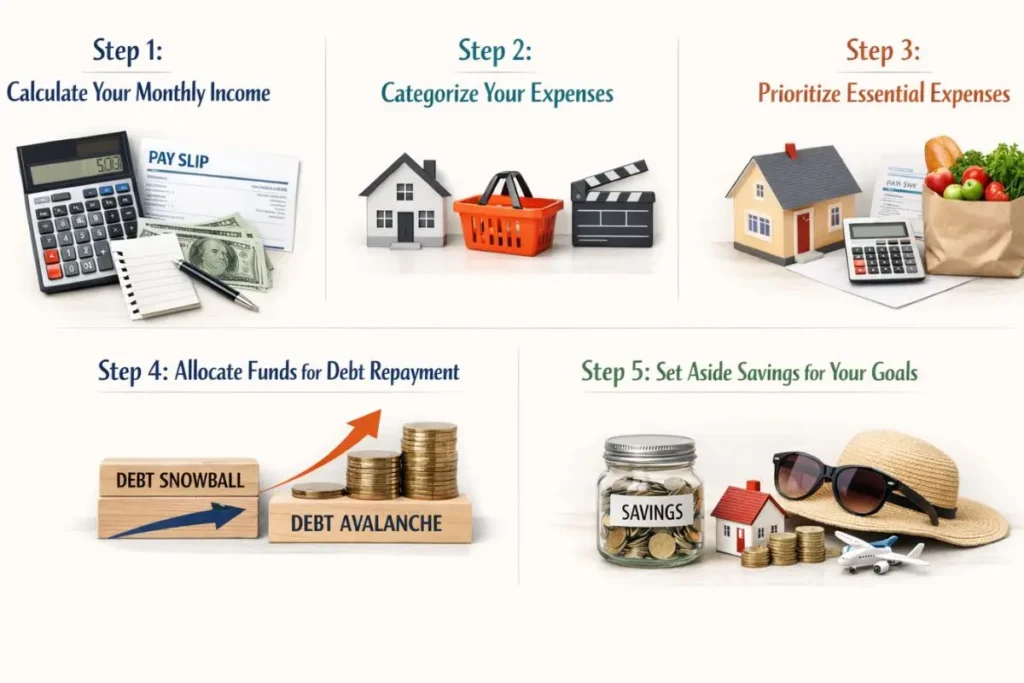
Now that you understand the key elements, here’s how to build a debt-free budget step by step:
Calculate Your Monthly Income
Start by calculating all of your income sources:
- Salary: Include your after-tax salary or wages.
- Side Income: Include freelance work, investments, or any additional earnings you receive.
- Other Income: Consider any passive income sources like rental income or dividends.
This gives you a clear picture of how much money is available to allocate towards your expenses, savings, and debt repayment.
Categorize Your Expenses
Knowing where your money is going is essential for staying debt-free. Break your expenses into the following categories:
- Fixed Expenses: These are costs that don’t change from month to month, such as rent or mortgage payments, car loans, and insurance premiums.
- Variable Expenses: These include groceries, utilities, and other expenses that fluctuate from month to month.
- Discretionary Expenses: This includes dining out, entertainment, shopping, and non-essential purchases. This is where you can make adjustments if you need to save more.
Prioritize Essential Expenses
When building a debt-free budget, essential expenses like rent, utilities, and groceries should be your top priority. Make sure you allocate enough for these fixed needs before focusing on discretionary spending.
Allocate Funds for Debt Repayment
If you have existing debt, set aside a portion of your income for repayment.
- Use the Debt Snowball Method: Pay off your smallest debts first to build momentum.
- Or the Debt Avalanche Method: Pay off the highest-interest debts first to save money in the long run.
By allocating funds specifically for debt repayment, you reduce your liabilities over time, freeing up money for savings and investments.
Set Aside Savings for Your Goals
Once essential expenses and debt repayment are covered, you can begin saving for your financial goals:
- Short-Term Savings: Emergency fund, vacations, or major purchases.
- Long-Term Savings: Retirement, down payments for homes, or college savings.
Tips for Sticking to Your Debt-Free Budget
Creating a debt-free budget is only half the battle. Staying on track can be tricky, but these tips can help you stay disciplined:
Automate Your Finances
- Automatic Payments: Set up automatic bill payments to avoid late fees and ensure bills are paid on time.
- Automate Savings: Set up an automatic transfer to your savings account each month. This takes the guesswork out of saving.
Review and Adjust Your Budget Monthly
- Adjust as Life Changes: Your income and expenses may fluctuate. Make it a habit to review your budget monthly and adjust as needed. This ensures that you stay on track toward your debt-free goals.
Cutting Out Unnecessary Spending
- Audit Your Spending: Go through your discretionary spending and find areas to cut back. For example, making coffee at home instead of buying it every day can save hundreds of dollars a year.
- Use Cash for Non-Essentials: Using cash for non-essential purchases can help limit impulse spending.
Use the 50/30/20 Rule
If you want a simpler approach, consider using the 50/30/20 rule:
- 50%: Essential needs (rent, utilities, groceries)
- 30%: Wants (entertainment, dining out, etc.)
- 20%: Savings and debt repayment
This framework provides a balanced way to stay on track without overcomplicating your budget.
Budgeting Mistakes
While budgeting is essential, there are some common mistakes that can derail your efforts. Here’s how to avoid them:
Ignoring Small Expenses
- Overlooking Small Purchases: Small expenses, like your daily coffee or streaming subscriptions, add up quickly. Keep track of everything.
Not Allowing Flexibility
- Life Happens: It’s important to leave room for adjustments in your budget. You may need to adjust for unforeseen expenses or changes in income.
Failing to Adjust for Inflation
- Adapt for Rising Costs: The price of goods and services often increases due to inflation. Regularly update your budget to account for these changes.
How Building Wealth by Staying Debt-Free
By staying debt-free, you create the freedom to invest and save for long-term goals. Here’s how staying debt-free contributes to wealth-building:
Investing for the Future
Without debt, you can use your extra funds to invest in stocks, retirement accounts, or real estate.
Financial Independence
A debt-free budget allows you to take control of your financial future. It’s a crucial step toward building wealth and becoming financially independent.
FAQS
1. How can I create a budget to get out of debt?
Creating a budget to get out of debt involves tracking all your income and expenses, categorizing them, and prioritizing debt repayment. Focus on cutting unnecessary expenses, using the debt avalanche or debt snowball method to pay off high-interest or smaller debts first, and setting realistic financial goals. It’s also crucial to build an emergency fund to avoid using credit for unforeseen expenses.
2. What is the best way to stay debt-free while budgeting?
The best way to stay debt-free while budgeting is to consistently track your spending, set up automatic savings and bill payments, and create a budget that prioritizes needs over wants. Limit impulse purchases, review your budget regularly, and be prepared to adjust it as necessary. Following the 50/30/20 rule (50% for needs, 30% for wants, and 20% for savings and debt repayment) can also help you stay on track.
3. How do I stick to a budget without falling back into debt?
Sticking to a budget requires discipline, monitoring your spending regularly, and adjusting for any life changes. To avoid falling back into debt:
- Automate your finances (savings, bills, debt repayment).
- Keep an emergency fund to cover unexpected expenses.
- Cut back on discretionary spending and use cash for non-essential purchases.
- Review your budget monthly to ensure you’re on track.
4. Can I still enjoy life while staying debt-free?
Yes, you can absolutely enjoy life while staying debt-free. By creating a debt-free budget, you’ll have more control over your finances, allowing you to allocate funds for both your needs and leisure activities. The key is balance—allow yourself to enjoy life while still prioritizing savings and debt repayment. You can use budgeting tools like the 50/30/20 rule to ensure there’s room for both fun and financial security.