

Investing in gold has long been regarded as one of the safest investment options, particularly during periods of economic uncertainty. As a safe-haven asset, gold offers protection against inflation, market volatility, and currency devaluation. For centuries, it has served as a reliable store of value, making it a timeless investment for those looking to safeguard their wealth. Whether you’re looking to diversify your portfolio, hedge against financial instability, or build long-term wealth, understanding how to invest in gold is essential.
This guide will walk you through the various investment methods, including physical gold, gold-backed ETFs, and gold mining stocks, empowering you to make informed decisions and achieve investment success in the precious metals market.
Why Gold is Considered a Safe-Haven Asset
Gold is often called a store of value, appealing during uncertain times because it holds steady or increases in value when other investments drop. Unlike stocks or bonds, gold is independent of the market’s performance.
- Inflation Protection: Gold serves as a hedge against inflation, retaining value when the purchasing power of currency drops.
- Market Uncertainty: In times of political or economic crises, investors flock to gold, driving its price higher. During the 2008 financial crisis, gold’s price surged while other assets faltered, reinforcing its role as a safe-haven asset.
Gold’s Historical Role in Financial Security
Gold has a long history as a trusted asset. During economic and political instability, it has been a reliable refuge. For instance, during periods of currency devaluation, countries often turn to gold as a reserve currency, ensuring its stability.
Benefits of Investing
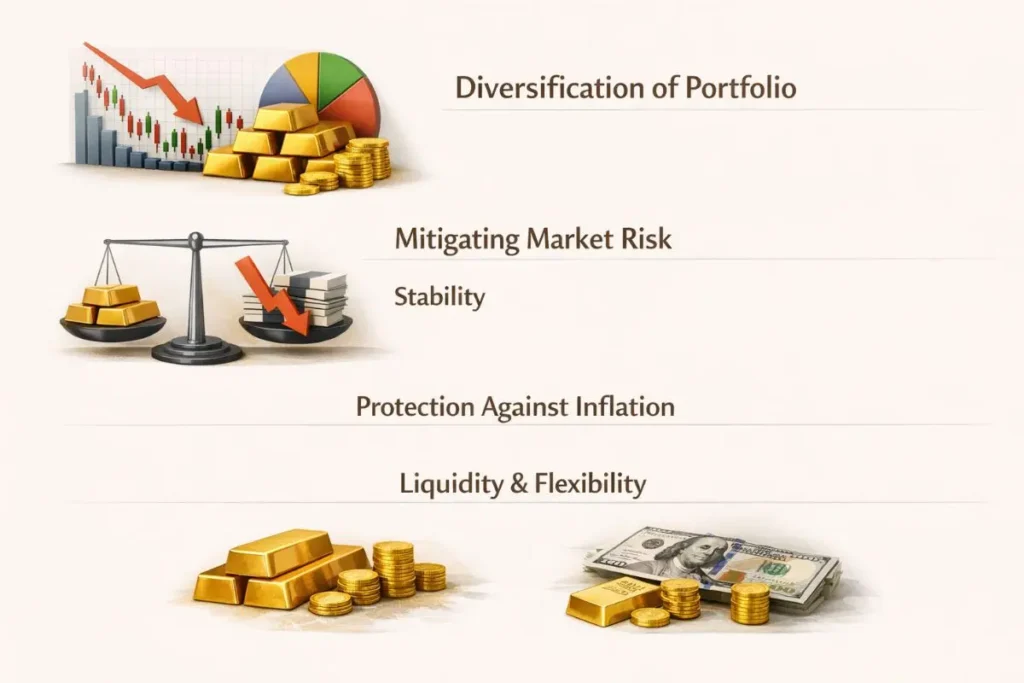
Diversification of Portfolio
Gold adds diversification to your portfolio, reducing overall risk. When stocks and bonds decline, gold typically performs well, making it a powerful tool for reducing overall portfolio risk.
- Mitigating Market Risk: Gold reduces potential losses from other investments.
- Stability: Gold’s historical performance shows it is less volatile than equities, providing stability in your investment strategy.
Protection Against Inflation
Gold is renowned for its ability to preserve wealth during periods of high inflation. As the cost of goods and services rises, the purchasing power of cash declines, but gold typically rises in value. For instance, during the 1970s stagflation (a period of high inflation and stagnant economic growth), gold prices skyrocketed.
Liquidity and Flexibility
Gold is incredibly liquid, meaning it can be quickly converted into cash. Whether you hold physical gold, gold-backed stocks, or ETFs, there is always a robust market for gold. This liquidity gives you the flexibility to access your funds when needed, unlike other assets such as real estate or collectibles.
Different Ways to Invest

Physical Gold: Coins, Bars, and Jewelry
Physical gold is the most direct form of investment. Here’s how you can invest:
- Gold Coins: Popular for both collectors and investors, minted by trusted authorities.
- Gold Bars: Larger and more cost-effective for serious investors.
- Gold Jewelry: While not a common investment vehicle, gold jewelry can serve both as an asset and personal adornment. However, it typically comes with a premium due to craftsmanship.
Gold ETFs and Mutual Funds
For those who prefer not to store physical gold, gold ETFs and gold mutual funds are convenient alternatives. These financial products allow you to gain exposure to gold’s price movements without requiring physical ownership.
- Gold ETFs: These are traded like stocks on exchanges and easily accessible through brokerage accounts. Popular ETFs include the SPDR Gold Trust (GLD), which holds physical gold to back its shares.
- Gold Mutual Funds: These funds pool money from investors to buy shares in gold mining companies, or to hold physical gold, offering another way to invest in gold without directly purchasing it.
Gold Mining Stocks
Investing in gold mining companies can provide exposure to gold, with additional growth potential if the company is efficient. However, these stocks come with company-specific risks like operational issues or regulatory changes.
Gold Futures and Options
For more advanced investors, gold futures and options are available, allowing speculation on gold’s future price.
- Gold Futures: A contract that obligates you to buy or sell gold at a future date at a predetermined price.
- Gold Options: Gives you the right, but not the obligation, to buy or sell gold at a specified price within a set timeframe.
How to Start
Investing in physical gold requires a few simple steps:
- Choose a Reputable Dealer: Whether online or in person, find a trusted source.
- Decide the Form of Gold: Coins, bars, or jewelry – choose what fits your goals.
- Store Your Gold Securely: Use a vault, safe, or other secure options.
- Buy in Small Quantities: Start with smaller amounts to reduce risk.
Opening an Account for Gold ETFs and Mutual Funds
Investing in gold ETFs or mutual funds is simple:
- Select a Brokerage: Open an account with a reputable brokerage (e.g., Fidelity, Charles Schwab).
- Pick Your Gold Investment: Choose between gold ETFs or mutual funds.
- Monitor Your Investment: Keep track of market conditions and adjust your holdings as necessary.
The Risks of Investing
Although gold is considered a safe-haven asset, its price still experiences fluctuations. Geopolitical events, changes in interest rates, or currency devaluation can cause gold prices to move unpredictably.
- Uncertainty: Gold’s price can fall when markets stabilize or when interest rates rise.
Storage and Security Concerns
For physical gold, storage and security are important concerns. Safe storage options can incur additional costs, and insurance may be necessary to protect against theft.
Gold Investment Scams
Always invest through reputable dealers and avoid offers that seem too good to be true. Verify the authenticity of your gold and ensure you are dealing with licensed, trustworthy sources.
Should You Invest Right Now?
Current Market Trends
Gold prices fluctuate based on a variety of factors, including interest rates, geopolitical stability, and global economic conditions. Understanding these trends can help you make a better-informed decision.
- Inflationary Pressures: If inflation is rising, it might be a good time to buy gold.
- Global Crises: Gold often shines during economic or political uncertainty, making it a strong choice when the market is volatile.
When to Buy Gold
The best time to buy gold is when its price is relatively low or when you anticipate global financial instability. Gold is typically a long-term investment, so consider your goals before making a purchase.
Gold vs. Other Safe-Haven Assets
Gold vs. Bonds and Real Estate
Gold is more liquid than both bonds and real estate, which can take longer to sell. While bonds provide stable returns, gold often performs better in uncertain markets.
Gold vs. Cryptocurrencies
Unlike cryptocurrencies, gold has a proven track record as a store of value. Cryptos may offer high returns, but their volatility makes them less stable compared to gold.
How Performs During Financial Crises
Historical Performance in Recessions
Gold has consistently performed well during financial crises. During the 2008 global financial meltdown, gold’s price surged while other assets collapsed. This demonstrates gold’s value retention during times of economic uncertainty.
Understanding Prices
Factors Influencing Gold Price Fluctuations
Gold prices are influenced by several key factors:
- Interest Rates: When interest rates rise, gold prices tend to fall.
- Geopolitical Instability: Wars or political unrest often drive gold prices higher.
- Dollar Strength: As the U.S. dollar weakens, gold prices typically increase.
Tax Implications
How Gold Investments Are Taxed in the USA
Gold investments are subject to capital gains tax when sold for a profit. Physical gold and gold ETFs are taxed as collectibles at a higher rate (28%), whereas stocks or bonds are taxed at lower rates (15-20%).
Part of a Retirement Strategy
How to Include Gold in Your IRA or 401(k)
A gold IRA allows you to include physical gold and other precious metals in your retirement portfolio. This option offers inflation protection and adds diversification to your retirement savings.
Environmental Impact
Sustainability in Gold Mining
Gold mining can have significant environmental effects, such as water usage, carbon emissions, and land degradation. However, many investors are now seeking more sustainable options, such as ethically sourced gold from responsible mining companies.