

In today’s fast-paced world, it’s crucial to build a smart budget for health and wellness expenses to maintain both physical health and financial stability. Managing health and wellness expenses can be overwhelming, but with the right approach, it’s possible to prioritize your well-being without overspending. Whether it’s covering medical costs, gym memberships, fitness classes, healthy food, or wellness treatments, having a solid budget plan ensures that your expenses align with your goals.
This guide will walk you through how to plan for essential health expenses and optimize your spending, helping you achieve a balanced and healthy lifestyle while staying on top of your finances.
Why You Need Its
Understanding the Growing Costs
Healthcare costs in the USA are skyrocketing. For many people, medical expenses can be one of the largest parts of their budget. It’s not just about doctor visits and hospital stays—wellness services such as gym memberships, mental health counseling, and fitness programs are adding up too.
- Healthcare premiums: Health insurance costs continue to increase, with many individuals paying hundreds of dollars per month just for coverage.
- Out-of-pocket expenses: Even with insurance, out-of-pocket expenses like co-pays and deductibles can be substantial.
- Wellness services: Wellness has evolved into a massive industry, but gym memberships, therapy, diet programs, and supplements can quickly drain your savings if not managed well.
Having a health and wellness budget allows you to allocate funds effectively, avoid overspending, and ensure you’re investing in your long-term well-being.
The Importance of Financial Wellness
Budgeting for health-related expenses is just as important as saving for other financial goals, such as retirement. When you manage your health and wellness spending well, you can enjoy better financial stability and a healthier life. Prioritizing wellness budgeting leads to a balanced life, where you can focus on living well without financial stress.
- Reduce stress: Knowing you have a clear financial plan for health-related expenses helps ease anxiety about potential health costs.
- Long-term benefits: When you effectively budget, you not only manage short-term expenses but also secure future health and wellness needs without jeopardizing your finances.
Principal Factors

Medical Expenses
Your health and wellness budget will likely have the most significant portion dedicated to medical costs. Here’s what you need to include:
- Health insurance premiums: Consider the monthly cost of your health plan, whether it’s a PPO, HMO, or high-deductible plan. This is a fixed cost but essential for protecting your health.
- Out-of-pocket costs: These include co-pays for doctor’s visits, prescription medications, and emergency care. Some expenses might not be covered under your insurance plan.
- Medical treatments: Beyond standard care, treatments such as physiotherapy, chiropractor visits, or surgeries can add up quickly.
Tip: If you have a High Deductible Health Plan (HDHP), consider pairing it with a Health Savings Account (HSA) for tax-free savings on medical expenses.
Fitness and Exercise
Regular exercise is vital for maintaining good health, but it comes with its own costs:
- Gym memberships: Gym fees vary significantly, so choose a membership that aligns with your budget. Some gyms offer discounts or special packages.
- Personal training: If you hire a personal trainer or attend specialized classes like yoga, Pilates, or cycling, these can be quite costly.
- At-home exercise equipment: Investing in equipment like dumbbells, resistance bands, or even a treadmill can help cut costs in the long run, but the upfront expense should be factored into your budget.
Tip: Consider free fitness resources like YouTube workout videos or apps that provide professional training for minimal costs.
Mental Health and Therapy
Mental health is an essential component of wellness, and it often requires regular financial commitment:
- Therapy or counseling: Regular sessions with a psychologist or therapist can add up, especially if your insurance doesn’t cover mental health services.
- Stress management programs: Meditation apps, yoga retreats, or stress management workshops can also form part of your wellness budget.
- Mental health apps: Subscriptions to apps like Calm, Headspace, or BetterHelp can be budget-friendly ways to support your mental well-being.
Tip: Many therapists offer sliding-scale fees or online therapy options, which can help lower costs.
Nutrition and Diet
Nutrition plays a vital role in both physical and mental health, and budgeting for food and diet services is crucial:
- Healthy grocery shopping: Budget for fresh, organic, and nutritious food items. Consider buying in bulk to save money.
- Meal delivery services: These services are convenient but often come with a price tag. Factor this into your budget if you rely on them for daily meals.
- Dietary consultations: Hiring a nutritionist or dietitian for personalized meal planning might be necessary if you have specific health goals like weight loss, managing a chronic condition, or boosting energy levels.
Tip: You can also save by preparing meals in advance, which prevents the temptation of eating out or relying on expensive ready-made meals.
Preventative Healthcare
Preventative healthcare is key to reducing future medical expenses:
- Routine check-ups: Regular physical exams, dental cleanings, and eye checkups prevent costly medical issues down the road.
- Vaccinations: Routine vaccinations for flu, pneumonia, or other preventable conditions should be included.
- Dental and vision care: Don’t neglect oral hygiene or eye exams, as these can help identify health issues early.
Tip: Many insurance plans offer preventative care at no additional cost, so check your policy to ensure you’re using these services.
Build Your Health and Wellness Budget
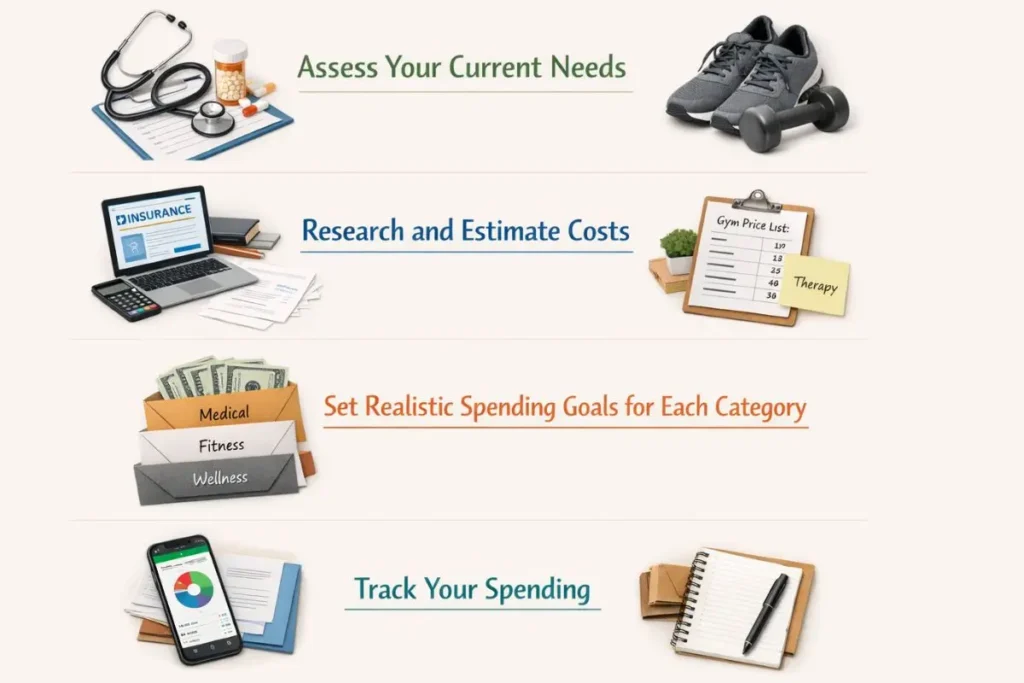
Assess Your Current Needs
Begin by evaluating your current health and wellness requirements. Think about your medical history, current conditions, and future health goals. Ask yourself:
- What are my medical needs? (Chronic conditions, medications, specialist visits)
- What fitness activities do I need to budget for? (Gym, personal training, sports)
- How much do I spend on wellness services? (Mental health, therapy, diet)
Research and Estimate Costs
Once you know your needs, research the costs associated with them. Start by looking up:
- Health insurance plans and their costs.
- Local gyms or online fitness programs and their pricing.
- The cost of therapy sessions or mental health services in your area.
Having an accurate estimate will help you plan better.
Set Realistic Spending Goals for Each Category
- Allocate funds: Assign realistic amounts to each section of your health and wellness budget based on your income and needs.
- Prioritize your spending: Focus more on essential medical care and preventative treatments before indulging in fitness programs or wellness services.
- Consider cutting back: If your budget is tight, look for cheaper alternatives (e.g., home workouts instead of gym memberships).
Track Your Spending
Use tools like Mint, YNAB, or a simple spreadsheet to keep track of your expenses. Set a reminder to check your health budget every month, making sure you’re staying within your limits.
Tip: If unexpected costs arise, don’t panic. Adjust your other spending categories to stay balanced.
Tips for Saving Expenses
Use Preventative Care to Avoid Expensive Medical Bills
- Stay proactive with health check-ups and screenings. Early detection of health problems leads to cheaper treatments.
- Take advantage of free health services like vaccinations or health consultations offered by your insurance.
Shop Smart Products
- Buy in bulk: Purchase non-perishable health items (e.g., vitamins, supplements) in bulk.
- Use online coupons: Always check for discounts before purchasing health-related items.
- Opt for generics: When possible, buy generic versions of medications and fitness products.
Take Advantage of Health Insurance Benefits
- Wellness discounts: Some insurance plans offer gym discounts or free wellness programs. Use them!
- Telemedicine services: Many insurers now offer virtual doctor visits, which can be cheaper than in-person appointments.
DIY Fitness and Nutrition Solutions
- Home workouts: Follow free YouTube fitness videos instead of paying for gym memberships.
- Meal prepping: Save by cooking your meals in advance rather than relying on expensive meal delivery services.
Overcoming Common Challenges
Managing Unexpected Medical Costs
Unexpected medical bills can disrupt your budget. Here’s how to handle them:
- Emergency fund: Set aside money specifically for medical emergencies.
- Flexible spending: Use a Health Savings Account (HSA) or Flexible Spending Account (FSA) for tax-free savings on medical costs.
Staying Motivated to Stick to Your Health Budget
Sticking to a health and wellness budget can be tough. Try these strategies:
- Set goals: Break your health and wellness goals into smaller, achievable steps.
- Reward yourself: After a month of sticking to your budget, reward yourself with something small, like a new fitness tracker or a healthy meal out.
How to Adjust Over Time
As your health needs change, it’s important to adjust your budget accordingly. Here’s how:
- Review periodically: Your health goals may evolve, requiring changes to your budget.
- Account for aging: As you age, healthcare needs may increase. Plan ahead by adding more to your medical expenses category.
Common Mistakes
When creating your health and wellness budget, avoid these common mistakes:
- Neglecting preventative care: Many people focus only on reactive spending. Prioritize regular checkups to prevent costly treatments later.
- Underestimating fitness costs: Remember that wellness isn’t just about gym memberships. Budget for all fitness-related expenses, including equipment and activities.
- Overcommitting to wellness trends: Be cautious about signing up for expensive wellness programs or products you might not use regularly.
Budgeting for Families or Couples
If you have a family or a partner, it’s essential to budget for shared health and wellness needs. Consider:
- Joint medical expenses: Combine healthcare costs, insurance premiums, and co-pays for all family members.
- Shared fitness goals: If everyone in the family is involved in fitness activities, create a collective budget for gym memberships, equipment, and classes.
How to Use Technology to Track Expenses
Technology can be a great ally in managing your health and wellness budget. Use these tools:
- Mint or YNAB: Budgeting apps that help you track your health-related spending.
- Health apps: Track your fitness, diet, and wellness activities through apps like MyFitnessPal or Apple Health.