

Starting an event planning business can be an exciting and rewarding venture, but it requires careful planning and strategic execution. To begin, it’s crucial to understand the event planning industry, including its challenges and opportunities. Key focus areas include building organizational skills, creativity, and the ability to manage multiple tasks simultaneously. As a beginner, it’s important to develop a solid business plan, clearly defining the services you’ll offer and the types of events you want to specialize in, such as weddings, corporate events, or private parties.
One of the first steps is to define your niche within the event planning market. Specializing in a specific type of event or a particular audience helps you stand out and allows for more targeted marketing. Building a strong portfolio showcasing your skills and past work will attract potential clients. Networking with vendors, suppliers, and clients is essential, as the event planning industry thrives on strong relationships and recommendations.
Understanding Event Planning Industry
The event planning industry is booming in the U.S., with businesses, individuals, and even nonprofits constantly seeking professional event planners. Whether you’re planning corporate conferences, weddings, or birthday parties, there is always a demand for well-executed events.
Market Opportunities
The event planning industry is vast, and there are several niches you can target:
- Weddings: A highly specialized and in-demand niche.
- Corporate Events: Plan conferences, workshops, and seminars.
- Private Parties: Specialize in smaller, personal events.
By defining your niche, you can better target your marketing efforts and tailor your services to meet client expectations.
Industry Trends
- Virtual Events: The rise of virtual events, particularly after the pandemic, has made remote event planning an essential service. Events like webinars, online conferences, and virtual meetups are common.
- Sustainability: Many clients now prefer eco-friendly events that incorporate sustainable practices, such as zero-waste catering or reusable decor.
- Experiential Events: People want to create memorable experiences, not just parties. This involves crafting personalized, immersive experiences for attendees.
Skills You Need to Become a Successful Event Planner
To succeed as an event planner, certain skills are essential. Not only do you need to be organized and efficient, but you also need to be creative, adaptable, and personable.
Communication
Strong communication is the backbone of any event planning business. You’ll be coordinating with clients, vendors, and staff, making clear communication crucial for ensuring everything runs smoothly.
- Negotiation skills: As an event planner, you’ll negotiate with vendors, clients, and service providers. Whether it’s securing the best prices for a venue or organizing catering options, your ability to negotiate will impact your bottom line.
- Client communication: Keep the client informed about progress, adjustments, and confirmations to ensure their expectations are met.
Organization and Time Management
The best event planners can juggle multiple tasks simultaneously while keeping everything on track. Your calendar will likely be packed, and managing time efficiently is essential to stay ahead of deadlines.
- Task management: Use tools like Trello or Asana to organize tasks and deadlines.
- Prioritization: Some tasks will be more urgent than others. Recognizing what needs your attention first is crucial for keeping everything running smoothly.
Creativity
Event planning requires you to think outside the box to create unique, memorable experiences for clients. You must stay current with trends while offering customized options tailored to each client.
- Design skills: Whether it’s choosing the right color scheme or selecting the perfect venue, having an eye for design is key.
- Innovation: Clients often want something new. You’ll need to consistently offer fresh, exciting ideas that meet their vision.
Attention to Detail
In event planning, small details matter. From ensuring guests are seated properly to making sure the menu items align with dietary preferences, attention to detail will set you apart from others.
Planning Your Event Planning Business
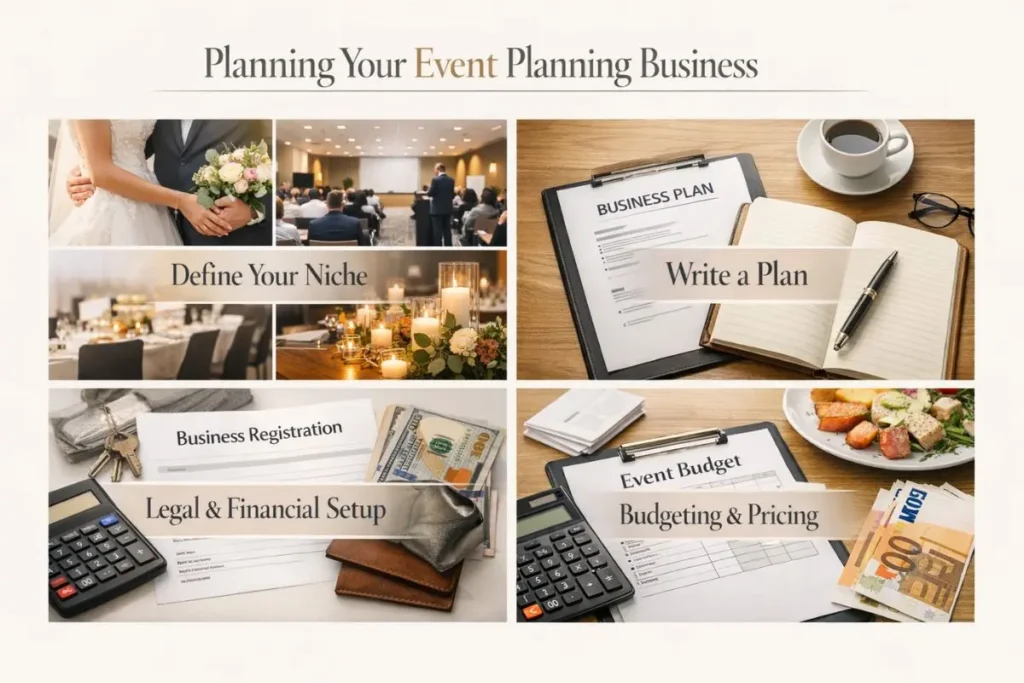
Now that you understand the skills required, let’s dive into the essential steps involved in starting your event planning business.
Define Your Niche
Event planning is a broad field, and finding a niche can help you stand out. Here are some options:
- Weddings: A highly specialized and in-demand niche.
- Corporate Events: Plan conferences, workshops, and seminars.
- Private Parties: Specialize in smaller, personal events.
By defining your niche, you can better target your marketing efforts and tailor your services to meet client expectations.
Write a Plan
A business plan is the foundation of your event planning business. This document will outline:
- Services: The specific types of events you will plan.
- Target Market: Who are your ideal clients (corporations, brides, etc.)?
- Budget: How much will it cost to start and operate your business?
- Marketing Strategy: How will you attract clients and grow your business?
Having a clear business plan will help you stay organized and focused on your goals.
Legal and Financial Setup
- Register Your Business: Choose a business name and legal structure (e.g., LLC, Sole Proprietorship).
- Get Necessary Permits: Depending on your location, you might need business permits or licenses.
- Finances: Open a separate business bank account, and keep track of income and expenses. Consider using accounting software like QuickBooks.
Budgeting and Pricing Your Services
Setting a fair pricing structure is vital. Consider all your costs, including:
- Venue fees
- Catering services
- Decorations
- Staff salaries
Your pricing should cover your costs, provide a profit margin, and remain competitive with other event planners in your area.
Building a Strong Network
As an event planner, your network is one of your most valuable assets. Building relationships with trusted vendors and suppliers will help ensure your events run smoothly and professionally.
Collaborate with Vendors
Vendors such as caterers, florists, and photographers are crucial partners in your business. Make sure to establish reliable partnerships with high-quality suppliers who share your commitment to excellence.
Join Event Planning Associations
Membership in professional event planning associations like MPI (Meeting Professionals International) or NAEP (National Association for Event Planners) can provide valuable networking opportunities, resources, and industry updates.
Networking Events
Attend industry trade shows, expos, and local networking events. By meeting potential clients, vendors, and other planners, you’ll gain visibility and business connections.
Marketing
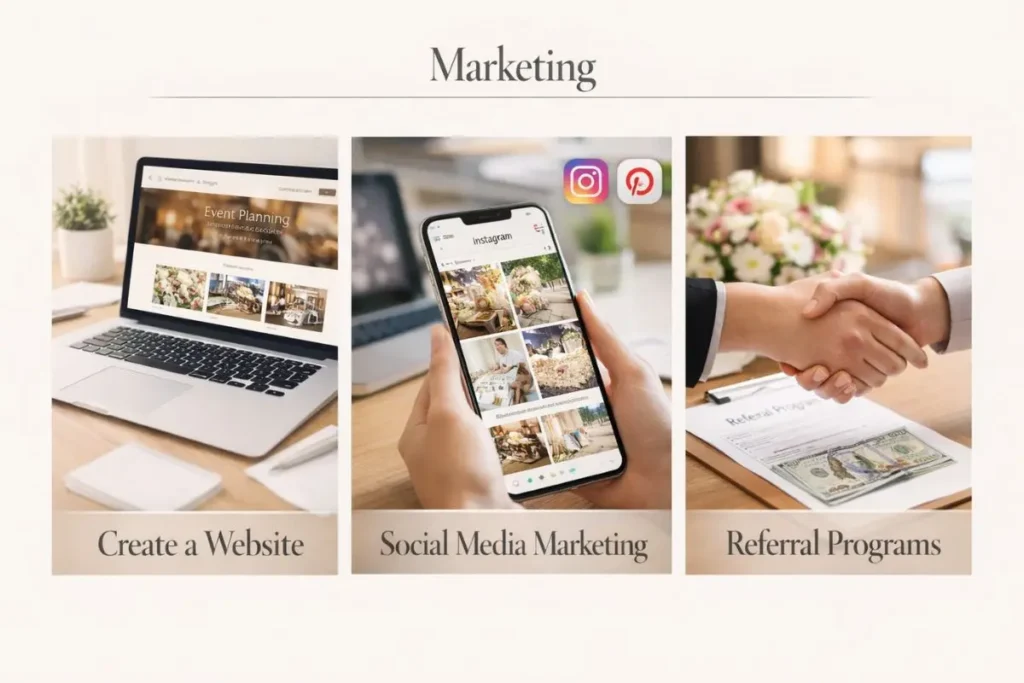
Effective marketing is essential to your success. Here’s how you can promote your event planning services.
Create a Website
Your website should serve as your business’s digital storefront. Include:
- Portfolio: Show off past events, with high-quality photos and testimonials.
- Service Details: Clearly outline the types of events you specialize in.
- Contact Information: Make it easy for potential clients to get in touch or request a quote.
Social Media Marketing
Platforms like Instagram and Pinterest are perfect for event planners. Post pictures, videos, and event highlights to showcase your work. You can also use platforms like Facebook to engage with clients, run promotions, and build a community.
Referral Programs
Offer a referral program to your satisfied clients. Word-of-mouth marketing is powerful in the event planning industry, and offering a discount or incentive for referrals can help grow your client base.
Managing Client Expectations and Delivering Success
To build a solid reputation, client satisfaction is crucial. Here’s how to manage expectations and deliver exceptional service.
Clear Communication and Contracts
Before starting any event, establish clear communication channels with your clients. Use a detailed contract that outlines services, timelines, and costs to avoid any misunderstandings.
Provide Excellent Customer Service
Go the extra mile for your clients. Be attentive, flexible, and willing to make adjustments as needed. Providing outstanding customer service ensures repeat business and positive reviews.
Post-Event Follow-Up
After an event, send a thank-you note to clients. Ask for feedback to improve your services and let them know how much you appreciate their business.
Common Challenges
While event planning can be an exciting career, it’s not without its challenges. Here are a few hurdles you might face:
Budget Constraints
Managing a budget is one of the toughest parts of event planning. You may have clients with high expectations but limited budgets.
How to Overcome It:
- Prioritize spending: Focus on what’s most important and allocate funds accordingly.
- Negotiate with vendors: Build relationships to get the best prices.
Tight Deadlines
Events often have strict timelines. Delays or last-minute changes can disrupt the entire process.
How to Overcome It:
- Be proactive: Always plan ahead and give yourself extra time for unexpected changes.
- Delegate tasks: Don’t hesitate to assign responsibilities to your team.
Managing Difficult Clients
Dealing with clients who have unreasonable demands can be frustrating.
How to Overcome It:
- Set clear expectations: Be upfront about what you can and can’t do.
- Communicate regularly: Keep clients in the loop so they know what to expect.
How to Scale
Once your event planning business is established, you’ll want to scale it for greater success. Here are some steps to help you grow:
Hire Staff
As your business grows, consider hiring other event planners to help manage multiple events. You may also want to hire assistants for administrative tasks.
Expand Your Services
Offer additional services such as event design, AV rentals, or specialized catering to attract more clients.
Increase Marketing Efforts
Boost your marketing efforts with paid ads, collaborations, and even influencer partnerships to reach a broader audience.