

In a world where uncertainty is constant, the idea of small, steady savings offers comfort. Small, steady savings can give you just that—peace of mind. Saving money doesn’t always require large amounts or big sacrifices. In fact, even modest savings can provide a solid foundation for your future and help reduce financial stress. Small, steady savings are the key to feeling secure and prepared, even if you’re starting with just a little. This article will show you how small, steady savings lead to big peace of mind, and why it’s essential to start saving today, no matter your current financial situation.
Why Small, Steady Savings Matter
The Power of Compounding
Compounding is one of the most powerful tools for growing your savings. It’s the process where your interest earns interest. When you consistently save a small amount, you let your money work for you, building wealth over time.
For example, if you save $50 each month into an account that earns 5% interest annually, over time, the interest earned will also start contributing to your savings. This is known as compound interest, and it’s often referred to as the “eighth wonder of the world.”
Key Takeaway: The more often you save, the more your money can grow. Even small, regular contributions can result in a large sum over time, making small, steady savings incredibly impactful.
Creating a Financial Safety Net
Life is unpredictable. From job loss to medical emergencies, unexpected expenses can appear at any time. Having a savings buffer can help you face these challenges with confidence.
By building a financial safety net, you give yourself the flexibility to handle these unexpected costs without falling into debt. Whether it’s an urgent medical bill or a car repair, small, steady savings offer a cushion that can reduce the emotional burden of financial stress.
Example: A simple $100 per month saved into an emergency fund can give you a strong financial cushion. Over time, this money becomes more than just a backup—it becomes peace of mind.
How to Start Saving, Even with Limited Income
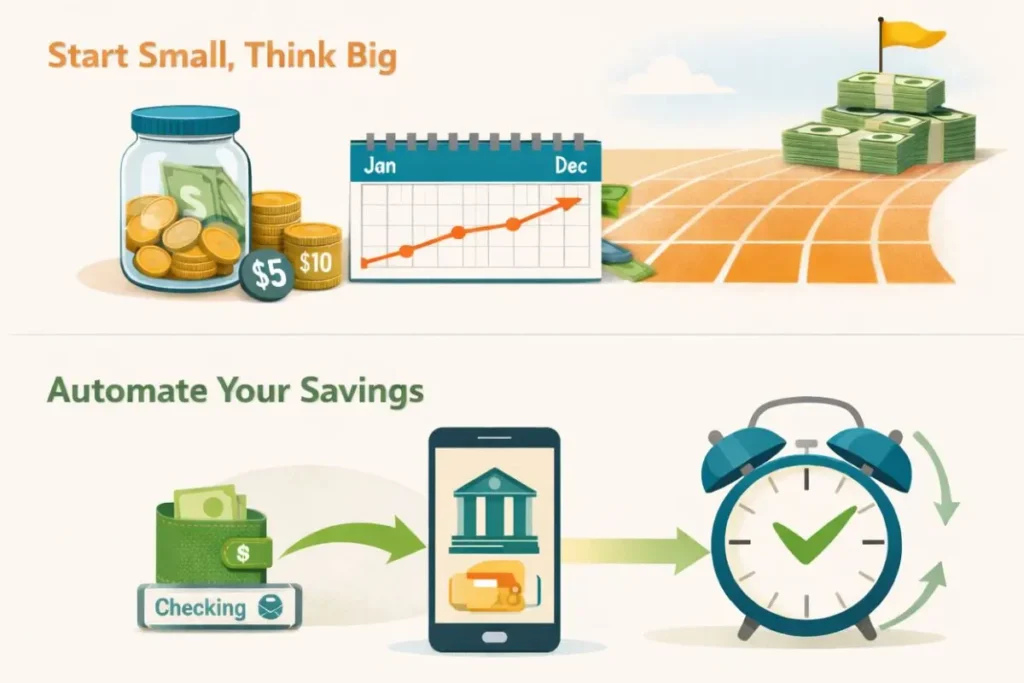
Start Small, Think Big
It’s easy to feel overwhelmed by the idea of saving, especially if you don’t have a large income. However, starting small is better than not starting at all. Even if you can only afford to save $5 or $10 a week, that’s a great start.
Tip: Think of your savings goal as a marathon, not a sprint. Consistency is key, and small amounts can add up over time.
Example: If you save just $50 each month, you’ll have $600 at the end of the year. Even more importantly, you’ll have established a habit that will serve you well for the rest of your life.
Automate Your Savings
The easiest way to stick to your savings plan is to make it automatic. Many banks offer automatic transfers, where you can set up regular withdrawals from your checking account into your savings account.
By automating your savings, you ensure that you save before you spend. It also eliminates the need to remember to save each month.
Key Benefit: Automating your savings makes the process effortless, ensuring that you stay on track even when life gets busy.
Building Your Savings Over Time

The Importance of Consistency
To achieve financial security, the key is consistency. Whether you’re saving $5 a month or $500, the regularity of saving is far more important than the amount. By making saving a regular habit, you create a stable financial base that provides long-term peace of mind.
Example: Someone who saves $100 every month will have $1,200 by the end of the year. While $100 may not feel like a lot right now, over time, this consistent effort leads to significant savings.
LSI Keywords: Consistent saving, long-term savings, savings discipline.
Tracking Your Progress
One of the best ways to stay motivated is to track your progress. This can be done manually or by using savings apps that help you visualize how much you’ve saved and how close you are to your goals. Regularly checking your savings account can motivate you to continue saving.
Tip: Celebrate small wins along the way, such as reaching your first $500 or $1,000. Acknowledging your progress can keep you motivated and excited about saving.
How Small, Steady Savings Provide Peace of Mind
Reduced Financial Stress
The greatest benefit of having small, steady savings is the reduction in financial stress. Knowing that you have money set aside for emergencies allows you to handle life’s challenges with a calm mind. This cushion means that unexpected expenses, like an emergency trip to the doctor or fixing a broken appliance, won’t derail your finances.
Example: Imagine if you lost your job. If you had a small emergency fund saved up, you could comfortably manage expenses for a few months while looking for new work, without the stress of falling behind on bills.
Improved Mental Health
Studies show that financial security directly impacts mental health. Having a savings plan gives you the confidence to face future challenges and helps reduce anxiety related to money. Small, steady savings aren’t just about numbers; they are about providing a sense of emotional and psychological well-being.
Key Takeaway: Financial stress is one of the leading causes of anxiety. By saving regularly, you reduce financial worries, leading to better mental health and a more peaceful life.
Common Savings Mistakes to Avoid
Putting Off Savings Until Later
One common mistake many people make is thinking that they’ll start saving when they’re in a better financial position. The truth is, there’s never a perfect time to start saving, so it’s important to start now, even if it’s just a small amount.
Example: Someone who puts off saving in their 20s may have to save much more aggressively in their 30s or 40s to catch up. Starting early, no matter how small, ensures you have more time to take advantage of compounding.
Employer Sponsored Savings Plans
If your employer offers a 401(k) or other retirement savings plan, it’s important to take full advantage. These plans often come with employer matches, which is essentially free money for your future.
Tip: If your employer offers to match your contributions, try to contribute at least enough to get the full match. This helps grow your savings significantly faster.
Stay on Track with Your Savings
Celebrate Small Wins
Celebrating milestones in your savings journey keeps you motivated. Whether it’s hitting a specific savings goal or simply sticking to your plan for a month, recognizing your achievements can fuel your desire to continue saving.
Involve Your Family in the Savings Journey
If you have a family, involve them in your savings plan. It’s much easier to stay on track when everyone is on the same page. You can also share your savings goals and discuss ways to cut back on spending or contribute to the family savings fund.
Tip: Family budgeting can be fun, and it creates a sense of shared financial responsibility. Plus, it teaches valuable money lessons to younger family members.
How Small Savings Help in Big Financial Goals
Even small savings can play a crucial role in achieving long-term financial goals like buying a house, going on vacations, or retirement. With steady saving habits, you can gradually build enough funds to fulfill these major objectives. It’s not about saving large sums at once, but about creating an intentional, long-term approach to reaching your goals.
Example: If you’re saving for a down payment on a house, starting with $100 a month may seem small. However, over 5 years, that’s $6,000 saved—plus the interest earned! That’s a solid contribution to your future home purchase.
Psychological Benefits
Saving regularly doesn’t just impact your finances; it also has powerful effects on your mental health. Knowing you have a buffer to fall back on can reduce anxiety and increase your confidence in dealing with unexpected situations. It helps you feel more in control of your financial life, reducing feelings of uncertainty and stress.
Tip: Track your savings progress and acknowledge the mental and emotional benefits. This practice will encourage you to continue saving, knowing the positive impact it has on your well-being.
FAQS
1. Why is it important to save small amounts of money regularly?
- Saving small amounts consistently helps build a financial cushion over time. It allows you to prepare for emergencies, reduce debt, and achieve long-term goals without the stress of large, one-time savings.
2. How can I start saving with a limited income?
- You can start saving with a limited income by automating your savings, cutting back on non-essential expenses, and setting small, achievable goals. Even small, consistent deposits can grow over time through compounding.
3. What are the best ways to track my savings progress?
- The best ways to track savings progress include using budgeting apps like Mint or YNAB, setting goals, and reviewing your account regularly. Visual progress helps keep you motivated and on track with your financial goals.
4. How does saving regularly reduce financial stress?
- Regular savings create a buffer for emergencies and unexpected expenses, allowing you to manage your finances with confidence. It reduces anxiety about future uncertainties and provides a sense of financial security.