

Starting your investment journey can be exciting, but how to avoid common investing mistakes as a beginner is a crucial step that many new investors overlook. These mistakes, such as emotional investing, lack of research, and failing to diversify, can hinder your ability to build wealth over time. In this guide, we’ll dive deep into the most common investing mistakes beginners make and provide practical strategies to avoid them. By understanding these common pitfalls, you can make smarter decisions, reduce your risk, and ensure your path to financial growth is as smooth as possible.
Understanding the Importance
Investing mistakes are a natural part of the learning curve, but they can be costly. When you’re new to investing, it’s easy to get overwhelmed by the amount of information out there. However, avoiding the most common mistakes can help you make informed decisions and build a strong portfolio.
Why Beginners Are Vulnerable
As a beginner, you may not yet fully understand the risks and rewards of different investment vehicles. This lack of understanding can lead to poor decision-making, such as putting money into high-risk assets without understanding their volatility or getting swayed by emotional impulses. However, by being aware of these mistakes, you can take steps to mitigate them and become a more confident investor.
Lack of Research
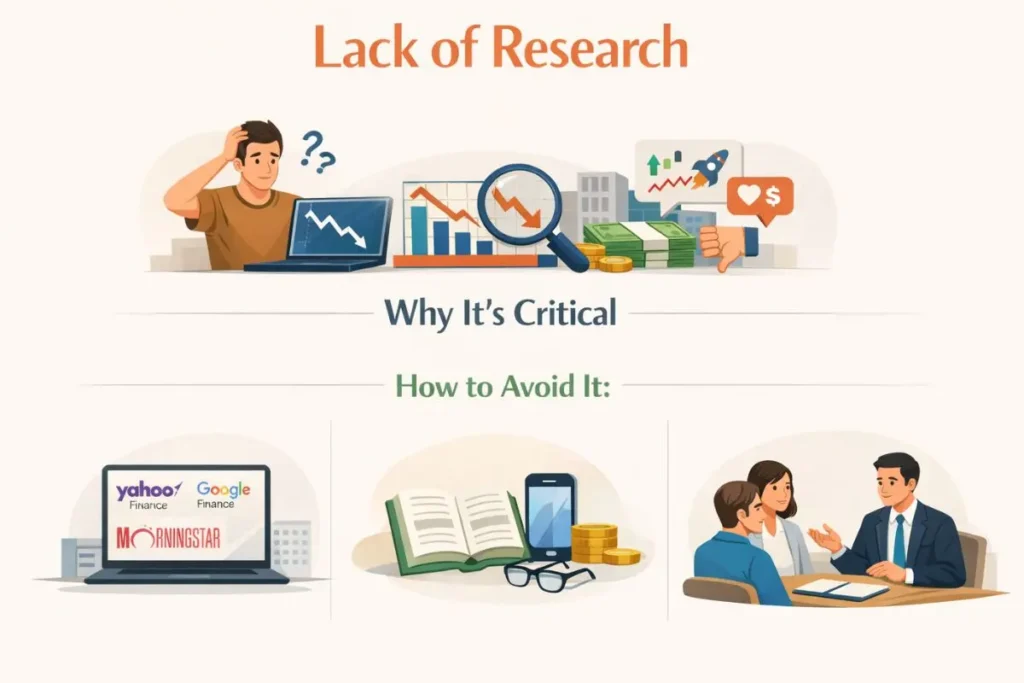
Investing without research is one of the biggest mistakes beginners make. Jumping into an investment without knowing what you’re getting into often leads to disappointment and financial loss.
Why It’s Critical
Investing in stocks, bonds, or real estate without understanding how they work can cause you to make decisions that harm your portfolio. For instance, you might invest in a stock just because it’s trending on social media, without understanding the company’s financial health, market position, or risks involved.
How to Avoid It:
- Use financial tools: Platforms like Morningstar, Yahoo Finance, and Google Finance offer great insights into stocks, mutual funds, and ETFs.
- Read: Invest time in understanding how different assets work. There are plenty of resources like Investopedia and books that can help you become a well-informed investor.
- Consult financial advisors: If you’re not sure where to start, seek help from a professional. Financial advisors can provide personalized recommendations based on your goals and risk tolerance.
Research is a vital step that ensures your investments are well-informed and aligned with your financial goals.
Emotional Investing
Emotional investing is another common trap for beginners. Many people make investment decisions based on fear or greed rather than logical analysis. For example, a stock market dip might cause you to panic and sell everything, or a sudden rise in stock prices might tempt you to buy in without evaluating the risk.
The Impact on Your Investments
Emotions like fear, greed, and FOMO (fear of missing out) can cloud your judgment, leading to rash decisions that you’ll later regret. This emotional cycle can cause you to buy high and sell low, which is the opposite of a successful investment strategy.
How to Avoid It:
- Have a clear investment plan: Set specific goals for your investments and stick to them. Your plan should be based on logic, not emotion.
- Use a long-term approach: The stock market has ups and downs. Staying invested for the long term allows you to ride out market fluctuations without letting emotions take over.
- Diversify: By spreading your investments across different sectors and asset classes, you reduce the impact of market volatility on your portfolio.
Emotional investing can lead to missed opportunities. By staying calm and sticking to your strategy, you increase your chances of success.
Overlooking the Importance of Diversification
Diversification is one of the most important principles in investing. Many beginners make the mistake of putting all their money into a single asset or sector, thinking it will generate high returns. However, this approach can be risky if that investment underperforms.
Why Diversification Matters
Without diversification, a downturn in one sector or investment could significantly impact your entire portfolio. For example, if you invest all your money in tech stocks and the tech sector suffers a major decline, you could lose a large portion of your investment.
How to Avoid It:
- Spread your investments across various asset classes like stocks, bonds, real estate, and commodities.
- Consider ETFs or index funds: These investment vehicles automatically diversify your portfolio by investing in a basket of stocks or bonds.
- Check your portfolio regularly: Over time, some investments may perform better than others, and your portfolio might need to be adjusted to maintain diversification.
By diversifying, you reduce risk and increase your chances of earning consistent returns.
Risks of Chasing Quick Profits
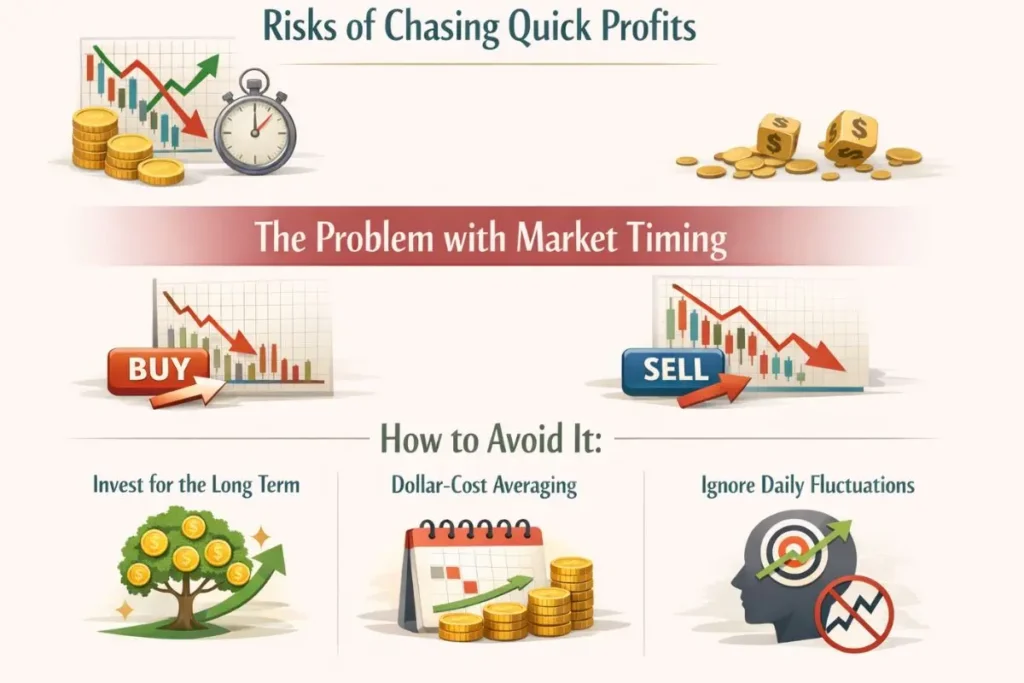
Trying to time the market is a popular but dangerous practice among new investors. The idea is to buy stocks when prices are low and sell them when prices are high. However, accurately predicting short-term price movements is virtually impossible.
The Problem with Market Timing
Market timing can be risky because it requires predicting both entry and exit points, which are difficult to do consistently. Often, beginners end up buying high and selling low, which results in significant losses.
How to Avoid It:
- Invest for the long term: Focus on companies and assets that show solid potential over time, rather than trying to capitalize on short-term price movements.
- Dollar-cost averaging: Invest a fixed amount of money at regular intervals. This strategy helps smooth out the effects of market volatility.
- Ignore daily fluctuations: Don’t panic when the market drops. Focus on your long-term investment goals rather than short-term movements.
Trying to time the market is a strategy that even the most experienced investors struggle with. By investing for the long term, you can avoid the traps of market timing.
Not Understanding Fees and Costs
Many beginners overlook the fees and costs associated with investing. These fees can significantly reduce your returns over time, especially if they’re high or hidden.
Types of Fees to Watch Out For
- Management fees: Many mutual funds and ETFs charge a percentage of your investment annually.
- Brokerage fees: If you trade through a brokerage, they may charge commissions on each trade.
- Expense ratios: This fee is charged by mutual funds and ETFs for managing your investments.
How to Avoid It:
- Compare fees: Research and compare the fees of different platforms before making a choice.
- Choose low-cost options: Opt for index funds or ETFs that have lower fees.
- Understand the fee structure: Make sure you understand all the fees involved, from commissions to management fees, before you start investing.
Being aware of fees and costs ensures that more of your money goes toward growing your investments rather than covering unnecessary charges.
Failing to Have an Emergency Fund
Before you dive into investing, it’s essential to have an emergency fund. An emergency fund is a savings cushion that can cover unexpected expenses without needing to sell your investments.
Why It’s Crucial
Without an emergency fund, you may have to dip into your investments during a financial crisis. This could result in selling at a loss, especially if the market is down at the time.
How to Avoid It:
- Build a 3-6 month emergency fund: Set aside enough money to cover living expenses for 3 to 6 months in case of an emergency.
- Keep it separate from your investments: Store your emergency fund in a savings account or a money market fund where it’s easy to access.
Having an emergency fund provides a safety net, allowing you to focus on growing your investments without worrying about short-term financial needs.
Ignoring Your Risk Tolerance
Every investor has a different risk tolerance—how much risk they’re willing to take on in pursuit of returns. Ignoring your risk tolerance can lead to poor investment decisions and unnecessary stress.
How It’s Affects Your Investments
If you invest in high-risk assets when you’re not comfortable with volatility, you could panic and sell during a market downturn. On the other hand, if you’re too conservative, you may miss out on growth opportunities.
How to Avoid It:
- Assess your risk tolerance: Take an online quiz or talk to a financial advisor to help determine your risk tolerance.
- Match your investments to your comfort level: If you have a low risk tolerance, consider safer investments like bonds or index funds.
Understanding your risk tolerance helps you choose investments that align with your goals and personality.
Not Rebalancing Your Portfolio Regularly
Over time, some assets in your portfolio will grow faster than others, causing your portfolio to become unbalanced. Failing to rebalance can lead to too much risk or missed opportunities.
How to Rebalance Your Portfolio
Rebalancing means adjusting your portfolio back to its original asset allocation by buying or selling assets. This keeps your risk level in check and ensures that your investments continue to align with your goals.
How to Avoid It:
- Review your portfolio regularly: Every 6 to 12 months, check to see if your portfolio is still balanced.
- Set rebalancing rules: Some investors rebalance automatically when their portfolio deviates by 5% or more from their target allocation.
Rebalancing helps maintain the right mix of assets, which is crucial for achieving your long-term goals.
FAQs
- What are the most common investing mistakes beginners make?
Lack of research, emotional decision-making, and failing to diversify are among the top mistakes beginners make. - How do I assess my risk tolerance for investing?
Take a risk tolerance quiz or consult a financial advisor to better understand your comfort with market fluctuations. - Should I try to time the market for better returns?
No, market timing is highly risky. Instead, focus on long-term investing and consistent strategies. - How much should I invest as a beginner?
Start small, focus on building an emergency fund, and invest consistently over time to develop a habit.