

Saving money doesn’t have to be a stressful or overwhelming experience. Many people think that saving requires sacrifice and rigid budgeting, but in reality, saving with ease is entirely possible with the right strategies. If you’ve been struggling to reach your financial goals, you’re not alone. However, it’s important to know that you don’t have to put unnecessary pressure on yourself to succeed. This article will show you how to save with ease and reach your goals without pressure by offering practical, simple steps that you can implement today. From setting clear goals to automating your savings, achieving financial success doesn’t need to feel daunting.
Whether you’re saving for an emergency fund, a vacation, or retirement, you’ll learn how to make your savings process smoother, more manageable, and stress-free. Saving with ease allows you to work toward your goals at a pace that suits you, without sacrificing the things that matter most in your life.
The Power of Goal Setting
Setting financial goals is the foundation of any successful savings strategy. Without clear goals, saving can feel aimless, and motivation can easily fade. When you have a specific target, every decision you make becomes part of a larger plan, making it easier to stay on track.
Why Goal Setting Makes Saving Easier
- Provides direction: With specific goals, you know exactly what you’re working toward, which helps you prioritize saving.
- Increases motivation: The clearer your goal, the more you’ll be motivated to reach it. Tracking progress is key to staying inspired.
- Prevents overspending: Goals help you identify what’s important and avoid impulse buys that derail your savings.
How to Set Clear Financial Goals:
- Be specific: Instead of vague goals like “save money,” set concrete targets, such as “save $2,000 for a vacation in 12 months.”
- Set realistic deadlines: Create a realistic timeline for your goal. Breaking your long-term goal into smaller, short-term targets (e.g., saving $200 a month) keeps things manageable.
- Monitor and adjust goals: Life changes, and so should your goals. Regularly reassess and adjust your goals to stay on track.
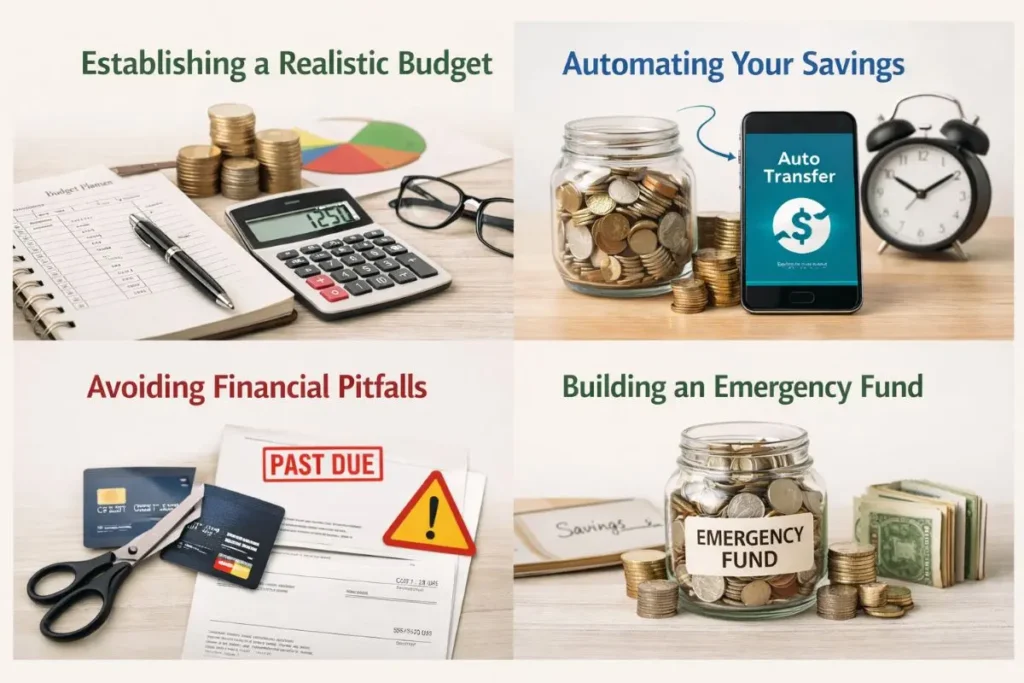
Establishing a Realistic Budget
A solid budget is key to saving with ease. Without it, it’s easy to overspend, making it difficult to save. A well-planned budget helps you allocate funds efficiently, ensuring you can save for your goals while covering necessary expenses.
Steps to Build
- Track your income: Begin by calculating all sources of income, including salary, side income, and any passive income.
- Categorize your expenses: Break your expenses into categories such as fixed expenses (rent, utilities), flexible expenses (groceries, dining), and discretionary expenses (entertainment, shopping).
- Set limits: Allocate a set amount to each category based on your income. Aim to save at least 20% of your income for your financial goals.
- Monitor and adjust: Regularly track your spending and adjust your budget if needed. Life changes, so it’s important to keep your budget up to date.
Example: If you earn $3,000 a month, aim to save $600 for your financial goals and use the remaining $2,400 for expenses.
Tip: Use budgeting apps like Mint or YNAB to simplify this process and make tracking easier.
Automating Your Savings
Automating your savings is one of the easiest ways to save with ease. With automation, you don’t have to remember to transfer money to your savings—it happens automatically, reducing the stress of saving.
- Direct deposit: Have a portion of your paycheck automatically deposited into a savings account.
- Set up automatic transfers: Arrange automatic transfers between your checking and savings accounts. You can decide on a fixed amount each week or month.
- Round-up savings apps: Apps like Acorns automatically round up your purchases to the nearest dollar and save the difference for you.
Example: If your paycheck is $2,000, set up an automatic transfer of $150 into a separate savings account each payday. By the end of the year, you’ll have saved $1,800 without even thinking about it.
Avoiding Financial Pitfalls
Saving doesn’t mean you have to give up everything you enjoy. It’s all about finding a balance between saving and spending. Enjoying life while staying on track with your financial goals is crucial for long-term success.
- Avoid impulse buying: It’s easy to make spontaneous purchases, but they often add up. Take a moment to evaluate if you really need an item before buying it.
- Stay mindful of your triggers: Track your spending habits and notice patterns that lead to unnecessary expenses.
- Prioritize meaningful spending: Spending on experiences, like travel or dining out occasionally, can bring happiness without derailing your goals.
Example: If you’re saving for a vacation, consider cooking at home instead of dining out five times a week. You’ll still enjoy good food while saving money for your trip.
Building an Emergency Fund
An emergency fund is essential to saving with ease. It provides a cushion for unexpected expenses such as car repairs, medical bills, or job loss, without derailing your savings goals.
How Much Should You Save
- Start with $500: Begin with a small but achievable goal to cover unexpected expenses.
- Build it up to 3-6 months of living expenses: Aim to have enough saved to cover at least 3 to 6 months of essential expenses for financial security.
Tip: Store your emergency fund in a high-yield savings account to ensure it grows over time.
The Psychology of Saving
Saving money often comes with emotional hurdles, such as impatience or guilt. Understanding the psychology of saving can help you overcome these barriers and maintain a positive attitude toward your financial goals.
Common Emotional Barriers to Saving:
- Impatience: Saving money takes time, and it’s easy to feel like you’re not making progress. Remind yourself that slow and steady wins the race.
- Fear of missing out (FOMO): Social media can make you feel like you need to keep up with others. Instead, focus on your own financial journey.
- Guilt: It’s okay to treat yourself occasionally, as long as it fits within your budget.
Example: If you’re saving for a major purchase, resist the urge to splurge on small, unnecessary items. You’ll be closer to your goal by staying disciplined.
Celebrating Small Wins

Saving money is a long-term process. Celebrating small wins along the way can help you stay motivated and remind you of your progress. These small milestones keep you excited to save more.
How to Without Overspending:
- Track your savings: Use an app or spreadsheet to see your progress visually.
- Reward yourself: After hitting a small goal, treat yourself to something special, but keep it within your budget.
Tip: Saving $50 a week may seem small, but over a year, it adds up to over $2,600. Celebrate that progress!
Finding Support
Saving with support from family and friends can make the journey easier. Having an accountability partner can motivate you and help you stay on track, even when things get tough.
Ways to Find
- Share your goals: Talk about your financial goals with loved ones so they can encourage and support you.
- Start a savings challenge: Join forces with friends or family to achieve a common savings goal. Whether it’s saving for a holiday or a group investment, shared goals are powerful.
Avoiding Comparison
Comparison is one of the biggest threats to saving without pressure. Everyone has different financial situations, and comparing yourself to others can cause unnecessary stress. Focus on your own progress, and be proud of the steps you’re taking toward financial independence.
Why its Hurts:
- It adds unnecessary pressure: You don’t need to match others’ lifestyles or savings strategies. Everyone’s financial journey is different.
- It leads to unhealthy financial decisions: Trying to keep up with others can lead to debt and poor financial choices.
Tip: Celebrate your unique path to financial success and avoid comparing yourself to others.
How to Handle Debt While Saving
Managing debt while saving can feel like a balancing act, but with the right approach, it’s possible to handle both simultaneously. Balancing debt and saving can relieve stress while keeping you on track toward your financial goals.
Tips for Balancing
- Prioritize high-interest debt: Pay off high-interest debts (like credit cards) first to avoid unnecessary interest payments.
- Save while paying off debt: Even when you have debt, make it a priority to save. Start small with contributions to a savings account or retirement fund.
- Consolidate debt: If you have multiple debts, consider consolidating them into one with a lower interest rate.
The Role of Passive Income
Building passive income streams can significantly ease the burden of saving. By creating multiple sources of income, you can grow your savings while focusing on other goals.
Ways to Build
- Invest in dividend stocks or real estate: Dividend-paying stocks or rental properties provide regular income without much effort on your part.
- Start a side business: Create digital products, such as online courses or eBooks, which generate income even when you’re not actively working.
- Sell content or designs: Platforms like Etsy or stock photo websites can provide additional streams of income.
The Impact of Inflation
Inflation is a reality that affects how much your savings can buy. To ensure your savings remain valuable over time, you need to account for inflation in your savings plan.
How to Combat Inflation:
- Invest in inflation-resistant assets: Stocks, real estate, and certain types of bonds tend to perform well despite inflation.
- Increase your savings rate: As inflation rises, consider saving more to maintain your purchasing power.