

Managing debt as a couple can be challenging, but it’s essential for building a strong financial future together. Mastering debt in your marriage is not just about paying off bills—it’s about creating a shared vision for financial freedom, tackling obstacles together, and supporting each other along the way. Whether you’re facing credit card debt, student loans, or mortgage payments, understanding the importance of budgeting, saving, and debt elimination is key to achieving lasting peace of mind. This guide will provide practical tools and tips for couples, helping you navigate debt together and reach your financial goals.
Why You Need to Act Now
If you’ve been avoiding financial talks or feel overwhelmed by the numbers on paper, you’re not alone. Financial challenges aren’t just a money issue—they’re an emotional burden that impacts every part of your relationship.
When left unchecked, these challenges can spiral, causing stress, arguments, and long-term damage to your financial health. But here’s the good news: tackling them together can be one of the most empowering things you do as a couple.
The sooner you face the truth, the sooner you can start making progress. It’s time for a fresh start, together.
Who Will Benefit
This guide is tailored for couples at all stages of their financial journey:
- Newlyweds merging finances and learning how to work as a financial team.
- Couples with debt (whether credit card debt, student loans, or car loans) who feel lost and need a structured plan to get out.
- Parents trying to balance debt repayment while saving for kids’ education or their future.
- Career changers looking to increase income and pay down debt faster.
- Couples navigating significant life events (buying a house, having a baby, etc.) with debt lingering over their plans.
- Anyone trying to regain financial stability—whether you’re managing debt from living expenses or unexpected life circumstances.
If you’re feeling overwhelmed, stressed, or unsure about your finances, this guide is for you.
3 Rules for Winning at Debt Management:

Transparency Is Key
Financial challenges only feel overwhelming when they’re hidden in the dark. Be upfront with each other about what you owe and how you’re going to tackle it. The more transparent you are, the less burden you’ll carry.
Real-Life Example: Mark and Lisa were avoiding the tough conversations about their credit card balances, each thinking they could “fix it on their own.” Once they sat down and openly shared their numbers, they were able to develop a strategy together. It was a game-changer for their relationship and finances.
Work Together as a Team:
This isn’t “your” or “my” – it’s our financial challenge. You’re in this together. When both partners have shared responsibility, it’s easier to stay motivated and accountable. The goal is to support each other and stay united in your approach.
Real-Life Example: Sarah and Jake, both overwhelmed by student loans, decided to work together on a payment plan. They agreed to each contribute equally based on their income, and it took the pressure off one person. Their teamwork made their plan work smoothly and quickly.
Tackle One Challenge at a Time:
Trying to address everything at once is a recipe for burnout. Focus on either the smallest balance (snowball method) or the highest-interest balance (avalanche method) first. Pay it off, then move to the next. By starting small, you’ll feel momentum that drives you forward.
Real-Life Example: Clara and Daniel paid off their smallest balance first—a $500 credit card balance. The win motivated them to tackle their bigger challenges, and they knocked them out one by one. The key? Consistency.
30-Day Power Plan
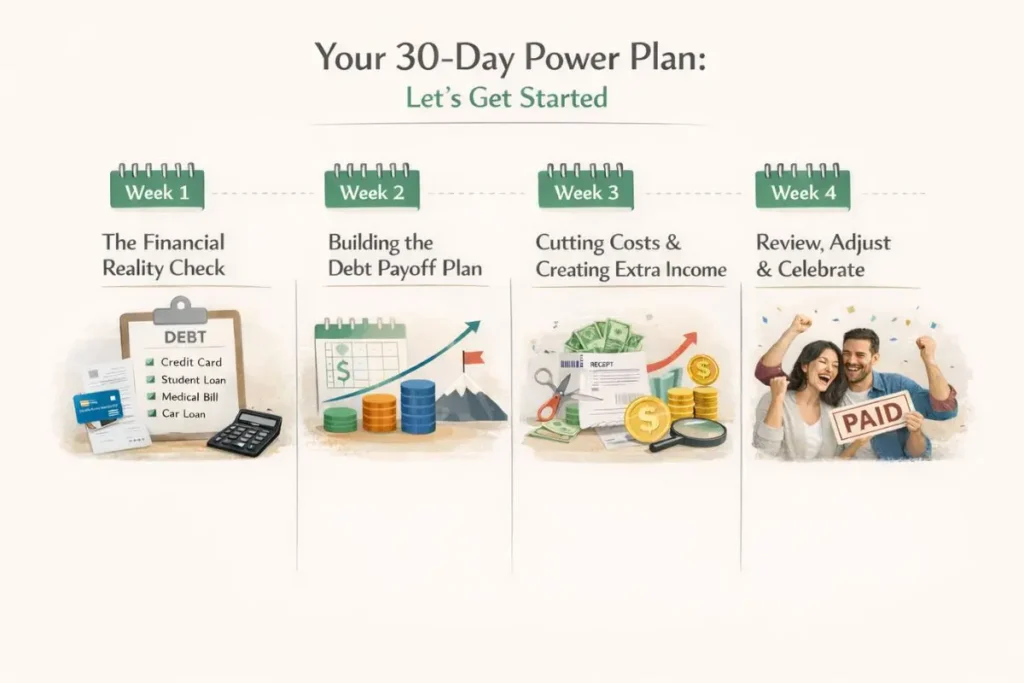
You’ve got 30 days to lay the groundwork for a debt-free future. Here’s how to break it down into manageable steps.
The Financial Reality Check
List All Financial Obligations: Write down every liability—credit cards, student loans, medical bills, car loans—along with the amounts, interest rates, and monthly minimums. Get the full picture.
Start Talking Money: Have an honest conversation about finances. Share what you’re each bringing to the table. Be transparent and open.
Set Up a Budget: Separate essentials from non-essentials. Focus on tracking needs versus wants to get control of your spending.
Track Spending: Use an app or spreadsheet to track every penny you spend. Knowing where your money goes will help you make smarter choices moving forward.
Building the Payoff Plan
Choose Your Strategy: Use the Snowball or Avalanche method. In Snowball, you focus on the smallest balance to build momentum. In Avalanche, you focus on the highest interest to save on costs.
Set Payments: Create a payment schedule. Aim to pay more than the minimum on your highest-interest item or the smallest balance, depending on your strategy.
Automate Payments: Set up automatic payments for any fixed obligations to avoid late fees.
Track Progress: Update your budget weekly. Reassess and tweak it as needed.
Cutting Costs & Creating Extra Income
Trim Your Budget: Find things to cut back on. For example, cancel subscriptions you don’t use, cook at home more often, or look for cheaper alternatives for utilities.
Increase Your Income: Look into side gigs like freelancing, tutoring, or selling unused items. Every little bit helps.
Track Savings: Apply any savings directly toward your payments.
Review, Adjust & Celebrate
Evaluate Progress: Check how much progress you’ve made. Are you sticking to your payment plan? Do you need to make adjustments to your strategy?
Boost Payments: If you’ve saved extra money or earned more, apply that to your financial obligations. Use every opportunity to speed up the process.
Celebrate Wins: Even small victories count. Celebrate paying off the first balance or sticking to your budget.
Tools That Actually Work
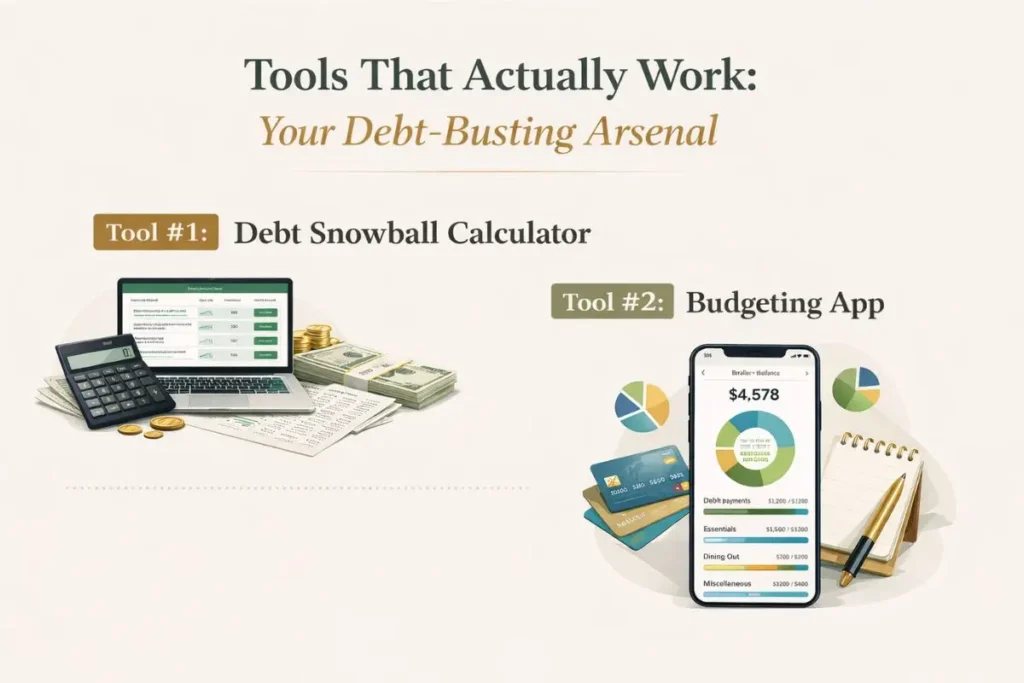
Debt Snowball Calculator
- How to Use It: Input your debts into the calculator, list them by amount, and start with the smallest. The calculator will show how long it’ll take to pay off each one.
- Tip: Stick with it—knowing the payoff timeline will keep you motivated.
- Resources: Use .it or any snowball calculator online to map out your debt elimination plan.
Budgeting App
- How to Use It: Set up categories for income, essential expenses, and debt repayments. Track your spending to stay on budget.
- Tip: Use Mint for easy syncing or YNAB (You Need A Budget) for a more detailed approach to budgeting.
- Resources: Mint automatically tracks your expenses. YNAB is great for proactive budgeting.
Boost Your Momentum
- Create a Separate Account for Debt Repayment: Keep the money you allocate for in a separate account to avoid temptation.
- Cancel One Subscription: Cut unnecessary expenses like gym memberships or unused streaming services. Apply that money to your
- Track Your Spending for a Week: See where your money goes. Use this information to adjust your habits.
- Call Your Creditors: Ask for a lower interest rate. Many will be willing to negotiate.
- Move Extra Funds to Debt: If you have any windfalls (birthday money, tax refunds), use them to reduce it.
What You Need to Know
- Debt Snowball: Pay off the smallest first to gain momentum and build confidence.
- Debt Avalanche: Focus on high-interest first to save money in the long term.
- Budgeting: Track your income and expenses to ensure you’re not overspending.
Common Mistakes
Mistake #1: Ignoring the Problem
Fix it by: Acknowledge the issue. Make a plan—awareness is the first step.
Mistake #2: Trying to Fix Everything at Once
Fix it by: Pick one financial challenge to focus on first. Whether it’s the smallest or the one with the highest interest, just get started.
Mistake #3: Relying on Credit Cards for Emergencies
Fix it by: Build a small emergency fund. Stop relying on credit cards for things you can’t afford right now.
Mistake #4: Not Communicating About Money
Fix it by: Have regular, open conversations about your finances. Be honest with each other to avoid misunderstandings.
Mistake #5: Sticking to an Ineffective Budget
Fix it by: Regularly reassess your budget. As your financial situation changes, so should your budget.
What You Can Expect
| Timeframe | What to Expect |
|---|---|
| Week 1-2 | You’ll have a clear understanding of your debt. Start seeing where money is going. |
| Month 1 | You’ll make your first payments and feel more organized. Momentum is building. |
| Month 3 | Debt reduction becomes noticeable. You’re feeling empowered and confident in your ability to stay on track. |
FAQ
Q1: How do we talk about debt without arguing?
A1: Make it a team conversation. Focus on solutions and the future, not blame. Approach it with openness and understanding.
Q2: Should we combine our debts or keep them separate?
A2: Combining debts is easier for most couples, but only if you’re both committed to the plan. If one partner has much higher debt, you might want to keep it separate.
Q3: How long until we’re debt-free?
A3: It depends on your strategy and commitment, but with consistent payments and a clear plan, you can see progress in 3-6 months.
Q4: What if we can’t make a payment?
A4: Communicate with your creditors. Many will work with you, offering deferred payments or other relief options.