

Student loan debt can feel like a heavy burden, but it doesn’t have to define your financial future. Mastering your student loan debt begins with a clear, actionable plan. By understanding your loans, setting realistic goals, and sticking to a strategy, you can gain control over your finances and start your journey toward financial freedom. This guide provides you with the tools and steps to take charge of your student loan repayment, offering clarity and support every step of the way. It’s time to take action and make a plan that works for you.
Get Real with Your Student Loan Debt
Student loan debt is one of those financial burdens that can feel overwhelming. You borrow money with big dreams, and then those dreams come with a price tag. Over time, it’s easy to ignore the bills as they pile up—but the longer you put it off, the harder it gets to escape the interest trap.
The real cost? You’re putting off important goals like owning a home, building wealth, and securing your future. So, why wait? Take charge now, and you’ll be one step closer to the life you deserve.
Who Needs This Guide?
This guide is for anyone who’s serious about taking control of their student loans and working toward financial freedom.
- Recent Graduates: You’ve just crossed the stage, and now those loans are looming. It’s time to take action.
- Current Students: You may not be out of school yet, but knowing how to handle your loans early is smart.
- Young Professionals: You’ve got your career started, but those loans are draining your paycheck. Let’s balance that.
- Career Changers: Ready for a fresh start, but feeling held back by student loans? This guide will help you manage them.
Wherever you’re at in your journey, this guide will give you the tools and knowledge to tackle your loans head-on.
Key Principles for Paying Off Debt
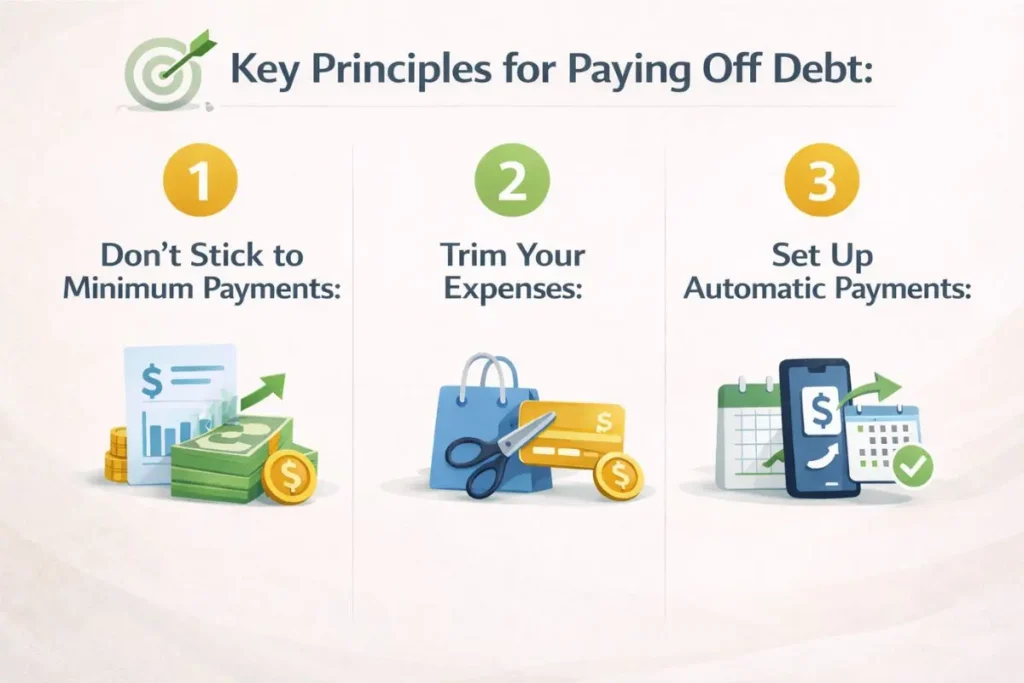
1. Don’t Stick to Minimum Payments:
Just paying the minimum isn’t going to cut it. Why? Because that’s how interest piles up. Let’s say you’ve got $25,000 in loans. Paying the minimum for years will barely touch the principal. But when you add just $200 to your payments, you’ll knock down the debt faster.
Real-World Example: Mark paid the minimum for 4 years on his $25,000 loan and only saw his balance drop by $6,000. When he added an extra $200 per month, he paid off $10,000 in the first year alone.
2. Trim Your Expenses:
You don’t need to live in deprivation, but cutting back on unnecessary expenses can fast-track your loan repayment.
Real-World Example: John realized he was spending $150 a month on subscriptions. He canceled a few, redirected the $150 to his loans, and paid off $2,400 in one year.
3. Set Up Automatic Payments:
Set it and forget it. Why this works: When your payments are automated, there’s no chance of forgetting a due date or paying late fees. Plus, you might even get a discount on interest rates for setting up automatic payments.
Real-World Example: Mia set her loan payments on autopilot. After a year, she had paid off $4,000 without any extra effort.
Your 30-Day Plan to Kick Debt to the Curb
Let’s break down what you need to do in the next 30 days to start taking action on your student loans.
| Week | Action | Goal |
|---|---|---|
| Week 1 | List All Loans: Write down all your loans, interest rates, and payment schedules. | Know exactly what you’re dealing with. |
| Week 2 | Create Your Budget: Cut back on non-essential spending, like eating out, streaming services, etc. | Free up cash to put toward loans. |
| Week 3 | Set Up Automatic Payments: Schedule automatic payments for at least the minimum due. | Stay on track with payments, avoid late fees. |
| Week 4 | Add Extra Payments: Put any extra money you’ve saved from cutting back toward your highest-interest loan. | Start paying down your loan faster. |
Tools You Can Use to Accelerate Loan Repayment
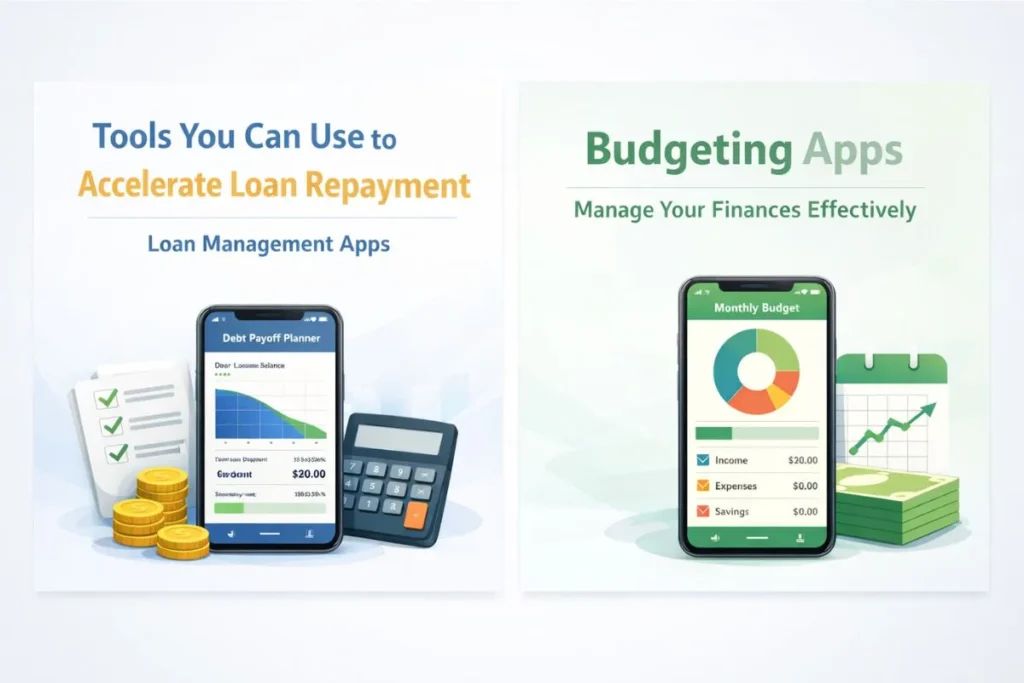
Loan Management Apps
How to Use:
- Download apps like Debt Payoff Planner or Student Loan Hero.
- Enter all your loan details (balance, interest rates, due dates).
- Let the app create a personalized repayment plan that fits your financial situation.
Pro Tips:
- Choose apps with easy-to-read dashboards.
- Use the app to check your eligibility for loan refinancing.
- Track your progress monthly to stay motivated.
Resources:
- Debt Payoff Planner
- Student Loan Hero
Budgeting Apps
How to Use:
- Download Mint or YNAB (You Need a Budget).
- Link your accounts to track your income and expenses.
- Set up specific budget categories to prioritize loan payments.
Pro Tips:
- Use Mint’s budget tracker to see where you can cut back on unnecessary purchases.
- Track your spending weekly for better control.
- Set goals within the app to stay focused on paying off your loans.
Resources:
- Mint
- YNAB
Quick Wins to Get Started Right Now
- Automate Payments: Set your loans to auto-deduct. You’ll never miss a payment, and it will help you avoid late fees.
- Round Up Payments: Round up your payments to the nearest $10 or $50. That extra amount will go straight toward reducing your loan balance.
- Refinance: If you’re eligible, refinance your loans to lower your interest rate and save money over time.
Understanding Common Loan Terms
Principal
The original amount you borrowed, excluding interest.
- Example: If you borrowed $20,000, that’s your principal. Interest is added on top of that.
Interest Rate
The percentage added to your loan balance each year.
- Example: If your loan has a 6% interest rate, you’ll owe 6% of the loan amount each year.
Forbearance
A temporary suspension of your loan payments, typically due to financial hardship.
- Example: If you lose your job, forbearance can give you temporary relief from your payments, but interest will still accrue.
Common Mistakes to Avoid
1. “Ignoring the Loans”
- Fix it by: Organize all your loan info and start tracking your payments right away.
2. “Paying Only the Minimum”
- Fix it by: Add extra money to your payments, even if it’s just $50 a month.
3. “Not Refinancing”
- Fix it by: Shop around for better rates and refinance your loans if you qualify.
4. “Spending Beyond Your Means”
- Fix it by: Adjust your budget. Cut back on non-essentials and allocate that money toward your loans.
5. “Using Forbearance Too Often”
- Fix it by: Use forbearance as a last resort. The longer you delay payments, the more interest you’ll have to pay.
Tracking Your Progress: Milestones to Hit
| Timeframe | Goal | What You’ll Achieve |
|---|---|---|
| Week 1-2 | Organize and Budget | You’ll have a complete picture of your loans and a budget for reducing them. |
| Month 1 | Automate Payments | You’ll see at least $500–$1,000 knocked off your debt. |
| Month 3 | Extra Payments | You’ll pay off $2,000 or more, depending on how much extra you can contribute. |
FAQ
Q1: How can I pay off my loans faster without earning more?
- You don’t need more money; just cut back on spending and pay extra where you can. Even small changes in your habits can make a big difference.
Q2: Should I refinance my loans?
- Refinancing can save you a lot if you qualify. It lowers your interest rate and can help you pay off the loan quicker.
Q3: Can I get loan forgiveness?
- Some government programs offer loan forgiveness if you work in qualifying jobs. Check with your loan servicer for options like Public Service Loan Forgiveness.
Q4: What happens if I miss a payment?
- Missing a payment can result in late fees and a negative impact on your credit score. Set up automatic payments to ensure you don’t miss any.