

Achieving financial security is a goal many strive for, yet it often feels elusive. With constant financial pressures and an overwhelming amount of advice, it can be easy to feel lost in the process. However, the key to securing your future lies in adopting The Calm Approach to Financial Security: One Step at a Time. Rather than rushing into complex decisions or drastic changes, this approach focuses on breaking down the process into manageable steps, allowing you to progress steadily toward your goal. Financial security doesn’t have to be a distant dream—it’s something you can build gradually with patience and a clear plan.
Whether you’re just starting your journey toward financial independence or working to improve your current situation, taking it one step at a time ensures that every decision aligns with your long-term vision. In this article, we’ll explore how a calm, methodical approach to budgeting, saving, investing, and debt management can help you achieve the stability and peace of mind that come with true financial security. By focusing on small, consistent actions, you’ll steadily build the foundation for a secure and stress-free financial future.
Why Financial Security Matters
Understanding Financial Security
At its core, financial security means having the ability to cover your living expenses, both now and in the future, without stress. This includes having enough savings to weather life’s storms, such as sudden medical expenses, job loss, or unexpected repairs. Financial security offers more than just comfort—it provides freedom. It means not having to worry about money constantly, allowing you to focus on your personal goals and aspirations.
The Link Between Calm and Financial Security
A calm approach to financial security helps you focus on the process rather than the pressure of getting everything done immediately. When we are calm, we make better decisions. Financial security doesn’t come from rushing through decisions; instead, it grows from consistent, thoughtful actions over time. By taking one step at a time, you avoid the stress of making mistakes in haste, and you position yourself for steady, sustainable growth.
The Calm Approach to Financial Security
Breaking the Process Down: The Power of Small Steps
Building financial security doesn’t require drastic changes overnight. The secret lies in breaking down your goals into manageable steps. When you approach money with patience, you don’t feel pressured, and you make better financial decisions. Remember, it’s not about perfection, but about consistent progress. Each small step you take will lead you closer to a secure financial future.
Start with a Solid Foundation: Building Your Budget
Creating a budget is your first, most important step. A budget helps you understand where your money is going, so you can plan accordingly. Here’s how to start:
- Track your spending: Keep a log of all your expenses for a month. Use budgeting apps like Mint or YNAB (You Need a Budget) to track and analyze your spending.
- Cut unnecessary expenses: Once you see where your money goes, you can easily identify areas to cut back.
- Set goals: Based on your analysis, set short-term and long-term goals for savings and spending.
A budget will become your foundation for all other financial decisions, ensuring your future is built on solid ground.
Achieving Financial Security
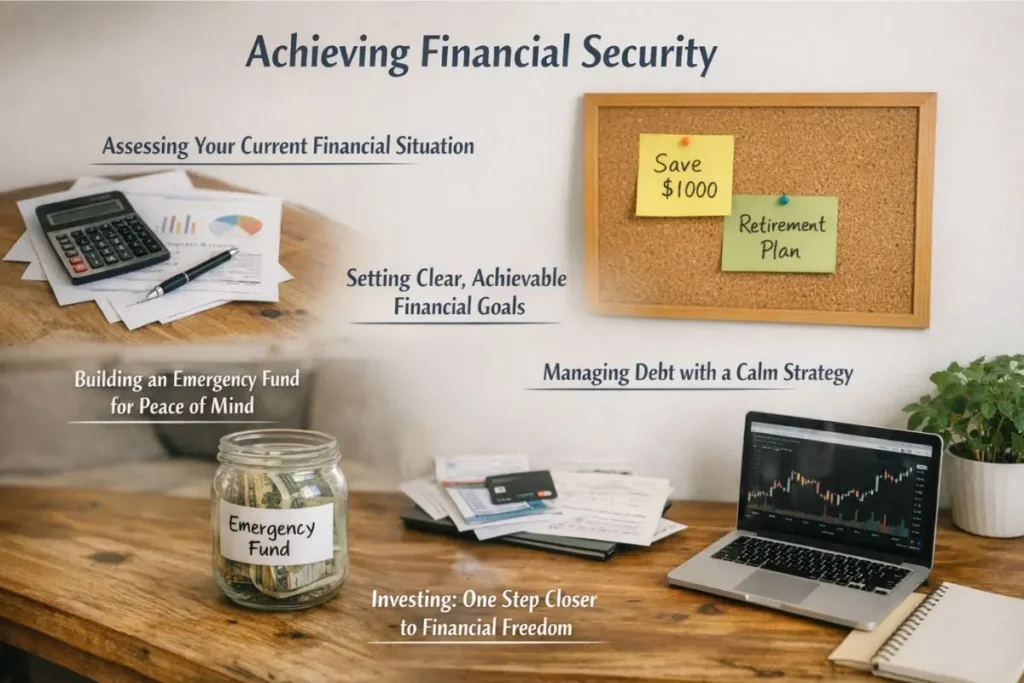
Assessing Your Current Financial Situation
Before you can move forward, take a deep dive into your financial health. Know where you stand with:
- Income: How much are you earning, and where does it come from?
- Expenses: What are your monthly costs, and are there areas to trim?
- Debts: What are your current debts, and what are their interest rates?
Knowing these details will give you the clarity you need to make informed decisions and move forward confidently.
Setting Clear, Achievable Financial Goals
Without clear goals, it’s easy to lose focus. Define both short-term and long-term goals that are Specific, Measurable, Achievable, Relevant, and Time-bound (SMART). For example:
- Short-term goal: Save $1,000 for an emergency fund within 6 months.
- Long-term goal: Save 15% of your income every year for retirement.
By setting SMART goals, you can track your progress and adjust as needed, ensuring you stay on course without feeling overwhelmed.
Building an Emergency Fund for Peace of Mind
A financial emergency fund is crucial. It’s the cushion that will protect you when the unexpected happens. The goal is to save enough to cover three to six months of living expenses. Here’s how:
- Start small: Aim for $500 or $1,000 as a starting point.
- Contribute regularly: Even $25 or $50 per month adds up over time.
- Keep it separate: Don’t dip into this fund unless it’s an emergency.
Having this safety net allows you to face financial challenges without panic.
Managing Debt with a Calm Strategy
Debt is a major obstacle to financial security. However, managing it doesn’t need to be stressful. Choose the debt repayment strategy that suits you:
- Debt snowball method: Focus on paying off the smallest debt first, then move on to larger debts.
- Debt avalanche method: Focus on paying off high-interest debts first, saving you money in the long run.
Both methods work—just pick one and stay consistent. With each debt eliminated, you’ll feel more secure.
Investing: One Step Closer to Financial Freedom
Investing is one of the best ways to grow your wealth over time. It’s essential for building a strong financial future. You don’t have to be an expert to get started; here’s how to begin:
- Start with retirement accounts: Contribute to a 401(k) or IRA.
- Consider low-risk options: Start with index funds or ETFs.
- Learn as you go: Read books, watch videos, and take courses to expand your knowledge.
Investing helps your money work for you, giving you more time to focus on the things you enjoy.
The Role of Mindset in Financial Security
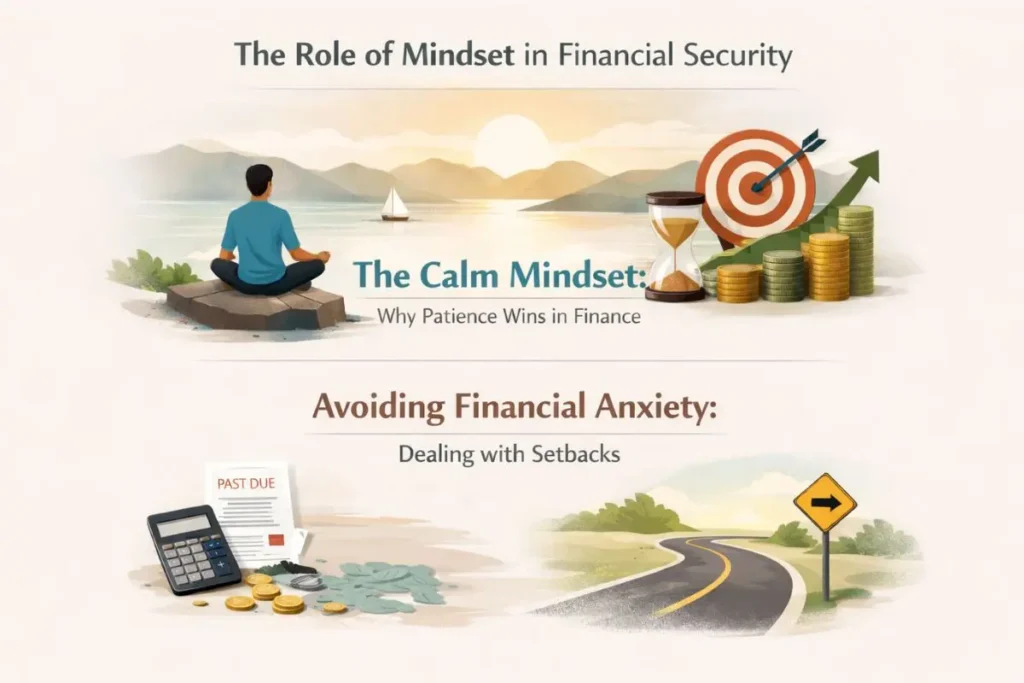
The Calm Mindset: Why Patience Wins in Finance
A calm and patient mindset is key to financial security. Making financial decisions based on calm reflection rather than impulsive emotions helps you avoid common pitfalls. Practice mindfulness, and focus on your long-term goals instead of the temptation for short-term satisfaction.
Avoiding Financial Anxiety: Dealing with Setbacks
Financial setbacks are normal. Whether it’s an unexpected bill or a missed opportunity, the key is not to panic. Stay calm and focus on the solution. With each setback, learn, adapt, and grow stronger in your pursuit of financial security.
Tools and Resources to Aid
Budgeting Apps and Tools to Stay on Track
Here are a few tools that can help you manage your budgeting and stay on track:
- Mint: Tracks your spending and helps you set goals.
- YNAB (You Need A Budget): Offers a comprehensive approach to budgeting with tools for saving.
- PocketGuard: Helps identify unnecessary spending so you can save more.
These apps help you monitor your finances without the stress of doing it manually.
Books and Courses on Financial Security
- “The Total Money Makeover” by Dave Ramsey: A great resource for beginners.
- Udemy & Coursera: Offer courses on everything from basic budgeting to advanced investing.
These resources are designed to give you the knowledge you need to achieve financial security confidently.
Consulting a Financial Advisor for Professional Guidance
If you need personalized advice, consider hiring a financial advisor. They can create a tailored plan that matches your goals and help you stay on track. Even if you’re just starting, an advisor can provide peace of mind and ensure you’re making the right moves.
Common Challenges
Staying Calm When Unexpected Expenses Arise
Life happens, and unexpected expenses will come up. However, having an emergency fund can help cushion the blow. If you don’t have one, now’s the time to start small and build over time.
Maintaining Consistency in Your Financial Journey
Consistency is essential. Set aside time each month to track your progress, review your budget, and adjust your savings goals as needed. By sticking to your plan, you’ll make steady progress toward financial security.
Real-Life Examples
Building Wealth Gradually
Sarah began with small, consistent contributions to her 401(k) and emergency fund. Over time, her money grew, and now, she feels financially secure. By following a calm approach, she avoided stress and achieved her goals gradually.
Overcoming Debt with Patience and Perseverance
John tackled his credit card debt by using the debt snowball method. With each small victory, he felt more empowered. Today, he’s debt-free and focused on building wealth.