

Starting a podcast and monetizing it is a fantastic way for beginners to share their unique voice, insights, or stories with the world. If you’re new to the podcasting scene and unsure of where to begin, don’t worry — this guide is here to help you every step of the way. From understanding the basics of podcasting to choosing the best equipment, creating engaging content, and building an audience, we’ll cover all the essential steps you need to start a successful podcast. But it doesn’t stop there — monetizing your podcast is just as important for turning your passion into profit.
Whether you plan to earn through sponsorships, ads, or listener support, we’ll explore the most effective strategies to help you generate income and grow your podcast brand. No matter your niche or topic, podcasting offers endless opportunities to connect with listeners and build a sustainable business. By the end of this guide, you’ll have all the tools and strategies you need to create a podcast that not only stands out but thrives in a competitive market. Let’s dive in and begin your podcasting journey!
Why Start a Podcast?
Podcasting has exploded in popularity, especially in the USA, where millions of people tune in to podcasts every day. Why should you start your own podcast?
- Massive Audience Growth: According to recent statistics, over 100 million people listen to podcasts each week in the USA.
- Build Your Personal Brand: Podcasting is a fantastic way to build a personal connection with your audience and showcase your expertise.
- Flexibility: Whether you’re creating educational content or sharing stories, a podcast lets you speak to a highly engaged audience.
- Monetization Potential: If you build a large enough audience, your podcast can become a source of income through ads, sponsorships, listener donations, and more.
With the right strategy, starting a podcast can be both fulfilling and profitable.
What You Need to Start
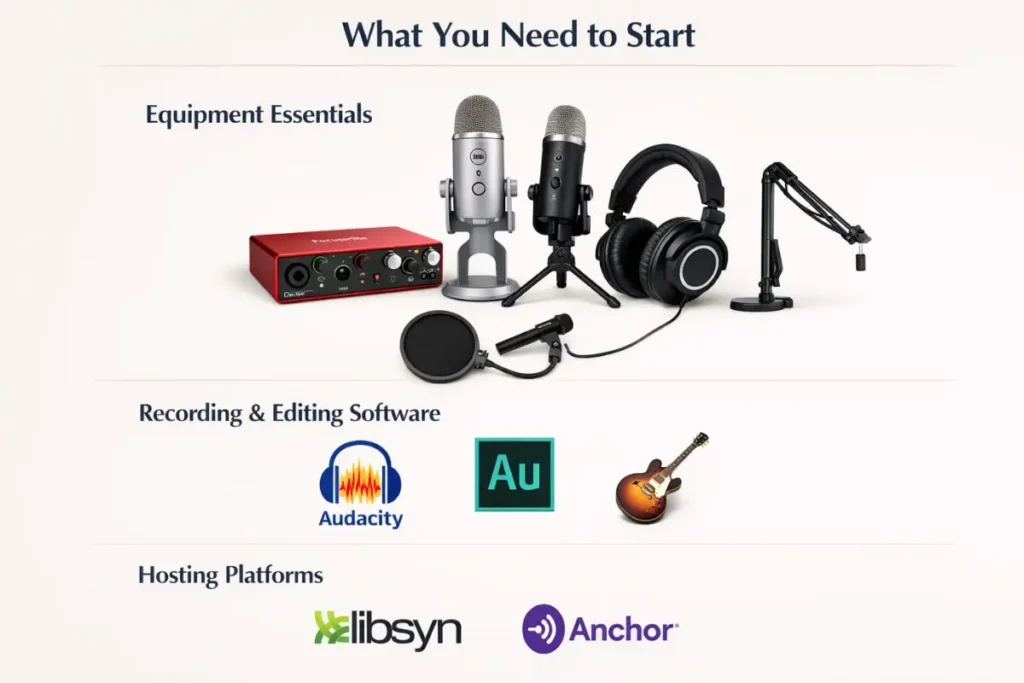
Before you can start recording, there are a few essential tools and software you’ll need.
Equipment Essentials
Starting a podcast doesn’t require expensive gear, but quality audio is crucial.
- Microphone: A high-quality microphone like the Blue Yeti or Audio-Technica ATR2100 is perfect for beginners.
- Headphones: Good headphones are essential to avoid feedback and monitor your audio as you record.
- Audio Interface: If you’re using an XLR microphone, you’ll need an audio interface (e.g., Focusrite Scarlett) to connect it to your computer.
- Pop Filter: This simple tool helps reduce popping sounds from consonants like “p” and “b.”
- Mic Stand: A stand helps reduce vibrations and noise while you’re recording.
Recording and Editing Software
Once you have your gear, you’ll need software to record and edit your podcast.
- Audacity: A free and easy-to-use software for beginners.
- Adobe Audition: A more advanced option for professional audio editing.
- GarageBand: Ideal for Mac users, it’s a free option with all the tools you need to start editing your podcast.
Hosting Platforms
To get your podcast out into the world, you’ll need to host it.
- Libsyn: One of the most popular hosting platforms. It offers reliable service with good analytics.
- Anchor: A free podcast hosting platform owned by Spotify that helps you distribute your podcast to major platforms like Apple Podcasts and Google Podcasts.
Planning Your Content
Successful podcasts need a clear content strategy. Here’s how to map out your show.
Define Your Niche
- Target Audience: Who are you speaking to? Is your audience interested in business, personal development, or comedy? Knowing your audience will shape your content.
- Pick a Topic: Focus on a niche you’re passionate about. Health & wellness, finance, or true crime are just a few examples. Having a clear focus helps you attract a loyal audience.
Format and Length
Deciding the format of your podcast is essential.
- Interview Style: Bring on guests to share different perspectives.
- Solo Podcast: Share your thoughts, stories, and experiences.
- Panel Style: Host a group of experts discussing various topics.
Episode Planning
Consistency is key. Plan out your episode structure and ensure that every episode provides value. Here’s how:
- Intro: Introduce yourself and the episode’s topic.
- Main Content: Dive into your discussion, offering insights and actionable advice.
- Outro: Thank your listeners, and include a call to action (e.g., “Subscribe to my podcast!”).
Setting Up Your Website
While it’s not mandatory, a website for your podcast can help you stand out and give your audience a one-stop place to learn more about your content.
Benefits
- SEO: A website helps you show up in search results. Use the keyword “Start a podcast and monetize it” in your show titles, descriptions, and episode notes.
- Branding: A website adds professionalism and offers listeners more information about you.
- Episode Pages: Include a page for each episode with transcripts, links, and resources.
How to Build
- Wix and WordPress are easy-to-use website builders for beginners.
- Squarespace is another excellent option, especially if you want beautiful templates with minimal effort.
Growing Your Audience
Building an audience takes time, but using the right strategies can speed up the process.
Promote on Social Media
- Instagram, Facebook, and Twitter are great platforms to engage with your audience.
- Share teasers and episode updates.
- Use hashtags and tag relevant guests or influencers to help expand your reach.
Collaborate with Guests
- Guest Appearances: Featuring guests on your show can introduce you to their audience.
- Cross-Promotion: Team up with other podcasters to promote each other’s shows.
Engage with Your Audience
- Ask your listeners to send in questions or topics for future episodes.
- Listener surveys can give you valuable feedback and content ideas.
Monetizing Your Podcast
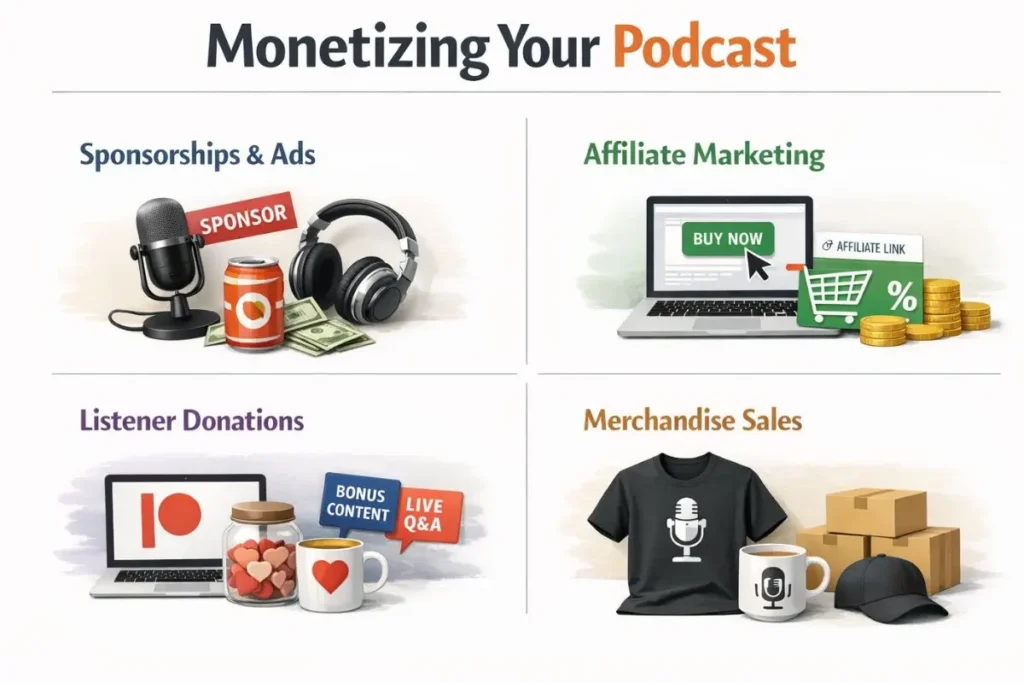
Once you’ve built a loyal audience, it’s time to monetize your podcast. Here are the top ways to make money.
Sponsorships and Ads
- Sponsorships: Brands will pay you to mention their products or services in your episodes. Once you reach a certain number of listeners, start reaching out to potential sponsors.
- Dynamic Ads: Platforms like Anchor let you add dynamic ads to your episodes, which can generate revenue automatically.
- Promote products you believe in and include your affiliate links in episode show notes.
- When listeners purchase through your link, you earn a commission.
Listener Donations
- Platforms like Patreon allow your listeners to donate and receive exclusive content in return.
- Offer special perks like behind-the-scenes content or live Q&A sessions to encourage donations.
Merchandise Sales
- Selling branded items like t-shirts, mugs, or stickers can also generate income. Websites like Teespring or Printful make it easy to design and sell merch.
Analyzing and Improving Performance
To keep improving and growing, track your podcast’s performance.
Analytics
- Libsyn and Anchor provide detailed analytics on listener demographics, download numbers, and engagement rates.
- Track what topics are resonating with your audience and adjust your content accordingly.
Listen to Feedback
- Ask for listener feedback in each episode. This could be through surveys or social media comments.
- Use feedback to improve content and keep your audience engaged.
Common Mistakes
Starting a podcast is exciting, but it’s important to avoid some common mistakes.
- Inconsistent Posting: Aim to release episodes consistently, whether it’s weekly, bi-weekly, or monthly. It keeps your audience engaged.
- Neglecting Audio Quality: Poor sound quality can turn listeners away. Invest in good equipment from the start.
- Waiting Too Long to Monetize: Start monetizing early. Even if your audience is small, there are ways to make money, like using affiliate marketing.