

Investing in bonds is a strategic way to build wealth with lower risk compared to other investment options, making it a popular choice for individuals seeking steady returns. Bonds are essentially loans made to governments, municipalities, or corporations, with the bondholder receiving regular interest payments, also known as coupon payments, until the bond matures. One of the key benefits of investing in bonds is their ability to offer predictable income and relatively stable returns, which makes them ideal for those looking for a conservative investment strategy.
When considering how to invest in bonds, it’s important to understand the different types of bonds available, such as government bonds, corporate bonds, and municipal bonds, each with varying levels of risk and return potential. By incorporating bonds into your investment portfolio, you can reduce overall portfolio risk while ensuring a consistent cash flow. This guide will cover essential strategies and tips on how to invest in bonds, the advantages of bond investing, and how to assess the best bond options to achieve financial stability and meet your long-term goals.
What Is a Bond?
A bond is essentially a debt security. When you invest in bonds, you are lending money to a government, corporation, or other entity. In return, the issuer agrees to pay you interest at regular intervals and to repay your original investment (the principal) when the bond matures.
Types of Bonds
There are several types of bonds, each catering to different investment needs:
- Government Bonds: These are issued by national governments. U.S. Treasury Bonds are considered the safest type of bonds because they are backed by the U.S. government.
- Corporate Bonds: Issued by companies, these bonds typically offer higher interest rates but come with higher risks.
- Municipal Bonds: These are issued by state or local governments. Municipal bonds offer the benefit of tax-free interest, making them especially attractive for high-income investors.
How its Work
When you buy a bond, you are essentially lending money to the issuer. The issuer then promises to pay you interest periodically, which is typically referred to as the coupon rate. At the end of the bond’s term (or maturity), the issuer will return the principal amount you invested.
Why This is a Safe Option in USA
Lower Risk Compared to Stocks
Bonds are generally considered a safer investment than stocks due to their predictable nature. Unlike stocks, which can be volatile, bonds are less likely to experience dramatic swings in value. This makes bonds a preferred option for investors looking to preserve capital while earning a steady return.
- Stable Returns: Bonds often offer fixed interest payments, making them an ideal choice for income-focused investors.
- Capital Preservation: As long as the issuer doesn’t default, you are guaranteed to get your principal back when the bond matures.
Steady Income Stream
Bonds provide regular interest payments, which can be especially attractive for retirees or anyone who desires consistent income without worrying about market volatility.
Inflation Protection
Certain types of bonds, such as Treasury Inflation-Protected Securities (TIPS), adjust their principal value in line with inflation, which means they help maintain your purchasing power even when inflation increases.
How to Invest in Bonds
Determine Your Investment Goals
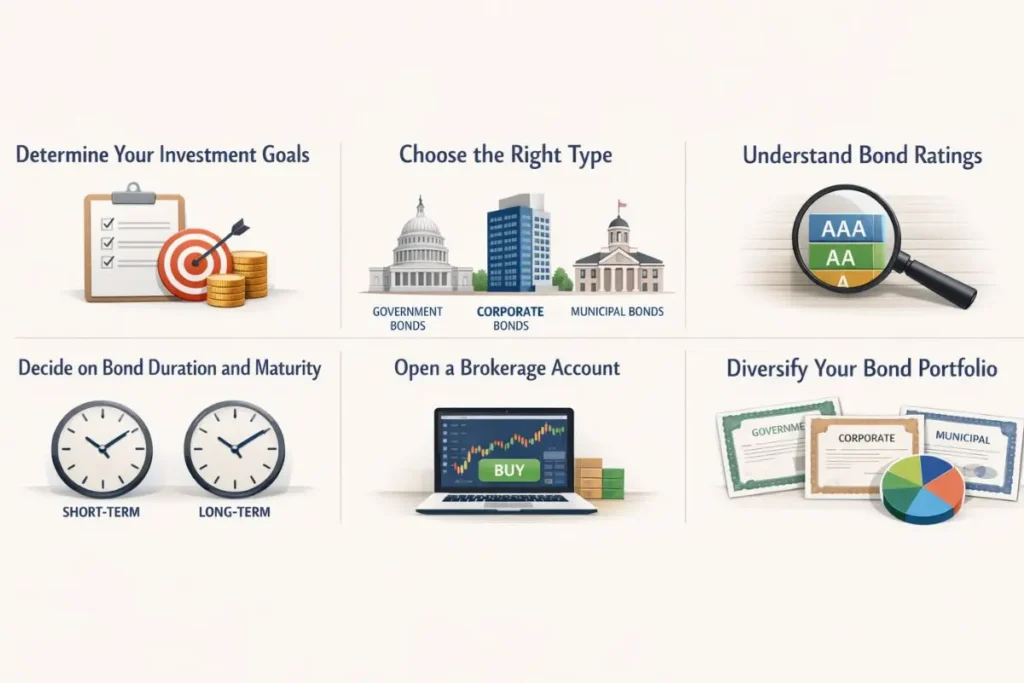
The first step in investing in bonds is to identify your financial goals. Do you want a stable income, tax advantages, or capital preservation? Understanding your goals will guide you toward the right type of bond.
- Capital Preservation: Focus on government bonds (e.g., U.S. Treasuries).
- Income Generation: Look for corporate bonds or municipal bonds that offer higher interest rates.
Choose the Right Type
The bond market is vast, and there are different types to consider:
- Government Bonds: These are ideal for investors who prioritize safety.
- Corporate Bonds: Higher returns but more risk; suitable for moderate investors.
- Municipal Bonds: Great for tax-free income, especially for investors in high tax brackets.
Understand Ratings
Bond ratings, such as AAA, AA, and A, represent the creditworthiness of the issuer. Higher-rated bonds have less risk, but they also offer lower yields. Be sure to check the bond rating before investing to understand the level of risk.
Decide on Bond Duration and Maturity
Bonds come in various maturities, from short-term bonds (1-3 years) to long-term bonds (10+ years). Your choice of maturity should align with your financial goals.
- Short-Term Bonds: Less risk, lower returns.
- Long-Term Bonds: Higher potential returns, but more sensitive to interest rate changes.
Open a Brokerage Account
To buy bonds, you need a brokerage account. Many online brokers offer easy access to bonds, including government bonds, corporate bonds, and municipal bonds.
Diversify Your Bond Portfolio
Don’t put all your money into a single bond. By diversifying your bond holdings (mixing government, corporate, and municipal bonds), you can spread risk and stabilize your returns. Consider bond mutual funds or exchange-traded funds (ETFs) to easily diversify.
Benefits of Investing
Predictable Income Stream
One of the most attractive features of bonds is the predictable interest payments. Unlike stocks, which can fluctuate, bonds provide fixed income, making them an excellent choice for income-focused investors.
Diversification
Bonds add diversity to your investment portfolio, reducing overall risk. The low correlation between bonds and stocks means that when stock markets fall, bonds often remain stable or even rise.
Tax Benefits
- Municipal Bonds: The interest from these bonds is typically tax-free at the federal level and may also be free from state taxes.
- Tax-Deferred Growth: Bonds held in retirement accounts like IRAs and 401(k)s can grow without being taxed until withdrawal.
Less Volatility
Bonds are less volatile than stocks, especially U.S. government bonds. For conservative investors, this stability is key to safeguarding their investments.
Risks of Investing
While bonds are generally safer than stocks, they still carry risks. Here are some of the primary risks associated with bond investing:
- Interest Rate Risk: When interest rates rise, bond prices tend to fall. If you sell a bond before it matures, you might not get the price you want.
- Credit Risk: If the issuer defaults (e.g., a company goes bankrupt), you may lose both your principal and interest.
- Inflation Risk: Bonds with fixed interest rates may lose value in an inflationary environment because the purchasing power of your interest payments will decrease.
- Liquidity Risk: Some bonds, especially corporate bonds, may not be easy to sell before maturity, limiting your ability to access cash.
Investment Strategies in USA
Buy and Hold Strategy
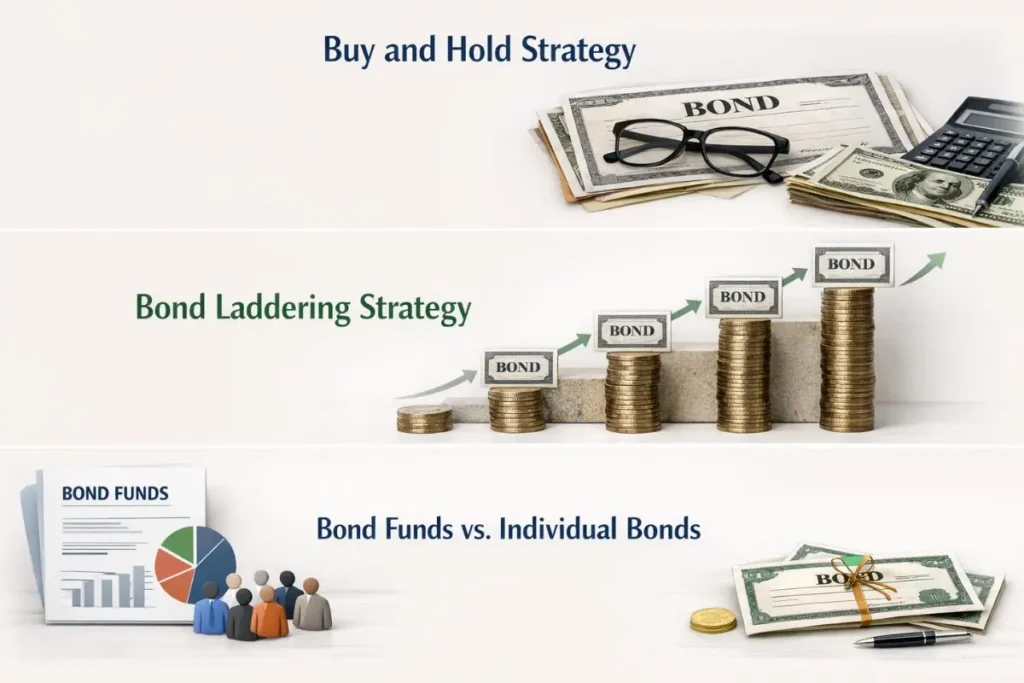
The simplest strategy is to buy and hold bonds until maturity. This strategy ensures that you will receive interest payments and the return of your principal without worrying about short-term market fluctuations.
Laddering Strategy
Bond laddering involves buying bonds with different maturity dates. As one bond matures, you reinvest the principal into another bond. This strategy can reduce interest rate risk and provide a steady income stream.
Funds vs. Individual
Bond funds pool money from multiple investors to buy bonds. This provides instant diversification and is ideal for those who don’t want to pick individual bonds. However, bond funds don’t offer the fixed maturity date that individual bonds do.
Invest in USA
Top Government Bonds in the USA
- U.S. Treasury Bonds: These are considered the safest bonds and are ideal for conservative investors. They offer lower returns but provide security backed by the U.S. government.
- TIPS (Treasury Inflation-Protected Securities): These bonds adjust with inflation, making them a great option for safeguarding your investment during rising inflation.
Corporate Bonds with Reliable Returns
- Apple and Microsoft issue high-rated bonds that offer competitive interest rates with minimal risk.
- Investment-Grade Corporate Bonds: Bonds from companies with strong credit ratings offer a stable return with relatively low risk.
Municipal Bonds
Municipal bonds are often a good choice for investors who want tax-free income. These bonds are issued by local and state governments and can provide significant tax advantages.
How Fit into a Diversified Portfolio
Bonds and Portfolio Diversification
Bonds are an essential part of a diversified investment portfolio. They provide stability and reduce overall risk. By balancing bonds with stocks, real estate, and other investments, you can create a well-rounded portfolio that performs well in both bull and bear markets.
Why You Need Bonds in Your Portfolio
If you’re primarily invested in stocks, adding bonds helps cushion your portfolio against market downturns. Bonds offer steady returns even when the stock market is volatile, ensuring that your portfolio remains balanced.
Tax Considerations for USA Investors
Tax-Free Municipal
One of the most appealing aspects of municipal bonds is that the interest is typically exempt from federal income tax and, in some cases, state and local taxes. This makes them an ideal choice for high-income earners in the USA.
Taxable
Bonds like corporate bonds and Treasury bonds are taxable. Be mindful of the tax implications and ensure you’re factoring this into your investment strategy.
When to Sell Bonds
Understanding Market Conditions
Sometimes, bond prices can fluctuate due to interest rate changes. If you need to sell your bond before maturity, you may want to wait for a favorable market condition when bond prices are high.
Selling Before Maturity
In some cases, you might want to sell a bond early to realize gains or move to a different investment. Understanding when to sell can help you maximize returns.